
1. Why Plastic Design Matters in Advanced Manufacturing
The use of plastics in aerospace and automotive manufacturing has grown rapidly due to their strength, light weight, and cost efficiency. Modern plastic design focuses on achieving durability, dimensional stability, and chemical resistance while maintaining precision and safety standards.
Industries rely on advanced plastic component design to reduce overall weight, improve fuel efficiency, and maintain mechanical strength. This balance of engineering and performance makes plastics a key material in both structural and non-structural components.
2. Material Selection for Performance and Compliance
Choosing the right plastic material is the foundation of good design. The aerospace and automotive sectors demand materials that perform under extreme temperatures, vibrations, and mechanical stress.
Key material considerations:
- Thermal Resistance: Choose materials like PEEK or PPS for components exposed to high heat.
- Impact Strength: Use reinforced polymers such as nylon or polycarbonate for safety-critical parts.
- Chemical Resistance: Ensure compatibility with oils, fuels, and cleaning agents.
- Regulatory Standards: Select materials that comply with FAA, ASTM, and automotive OEM specifications.
Proper material selection improves product lifespan, performance, and reliability, while ensuring compliance with global industry standards.
3. Designing for Manufacturability and Assembly
A well-designed plastic component is one that can be efficiently produced and assembled without compromising function. Designers must consider manufacturability early in the process to reduce production errors and rework.
Best practices for manufacturable design:
- Maintain uniform wall thickness to prevent warping and shrinkage.
- Incorporate proper draft angles for easier part release during molding.
- Use fillets instead of sharp corners to distribute stress evenly.
- Plan for assembly by integrating fastening or welding features.
These design practices reduce cycle times, improve consistency, and enable efficient plastic molding and assembly essential for aerospace and automotive production.
4. Prototype, Test, and Validate Before Production
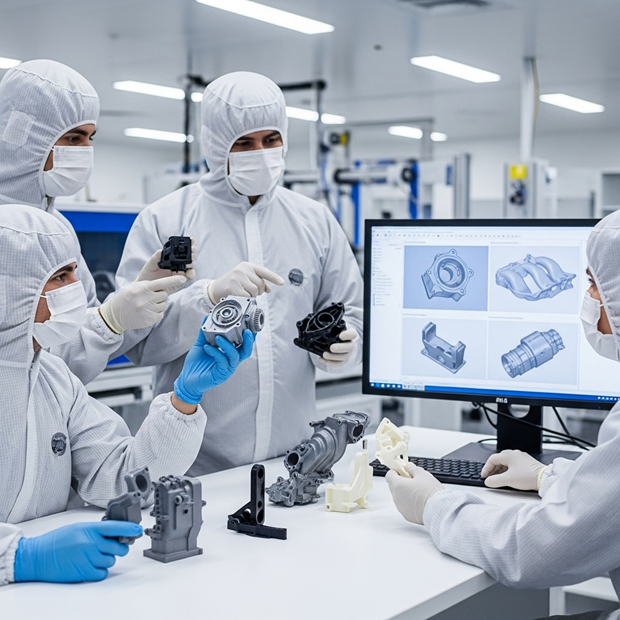
Prototyping plays a major role in refining the design and validating performance before mass production. Through rapid prototyping and CNC plastic machining, engineers can identify flaws early and make precise adjustments.
Effective prototyping steps:
- Develop a digital 3D model to simulate stress and heat conditions.
- Use prototype testing to measure tolerance, fit, and performance.
- Validate designs through real-world testing environments.
This process shortens development cycles, lowers costs, and ensures every component performs as intended under demanding conditions.
5. Partnering with the Right Plastic Design and Manufacturing Expert
Collaborating with an experienced plastic manufacturing company ensures access to the right technology, expertise, and quality systems. Foxx Technologies provides end-to-end plastic design, prototyping, machining, molding, welding, and cleanroom assembly under one roof reducing lead time and ensuring total quality control.
With proven experience in aerospace, automotive, defence, and industrial sectors, Foxx Technologies delivers precision-engineered plastic components that meet the most demanding specifications.
Partner with Foxx Technologies to bring precision, reliability, and performance into your next plastic design project.