

How long does it really take to turn a custom plastic component from an approved design into a production-ready part? A project can appear straightforward on paper, yet tooling changes, material sourcing, prototype revisions, or testing requirements can extend the schedule before production even begins.
For product engineers and procurement teams, understanding these factors early is essential. The right manufacturing process, clear specifications, and coordinated engineering decisions can help prevent avoidable delays. Here is what determines custom plastic part manufacturing lead time and how to plan your project more effectively.
What Determines Custom Plastic Part Manufacturing Lead Time?
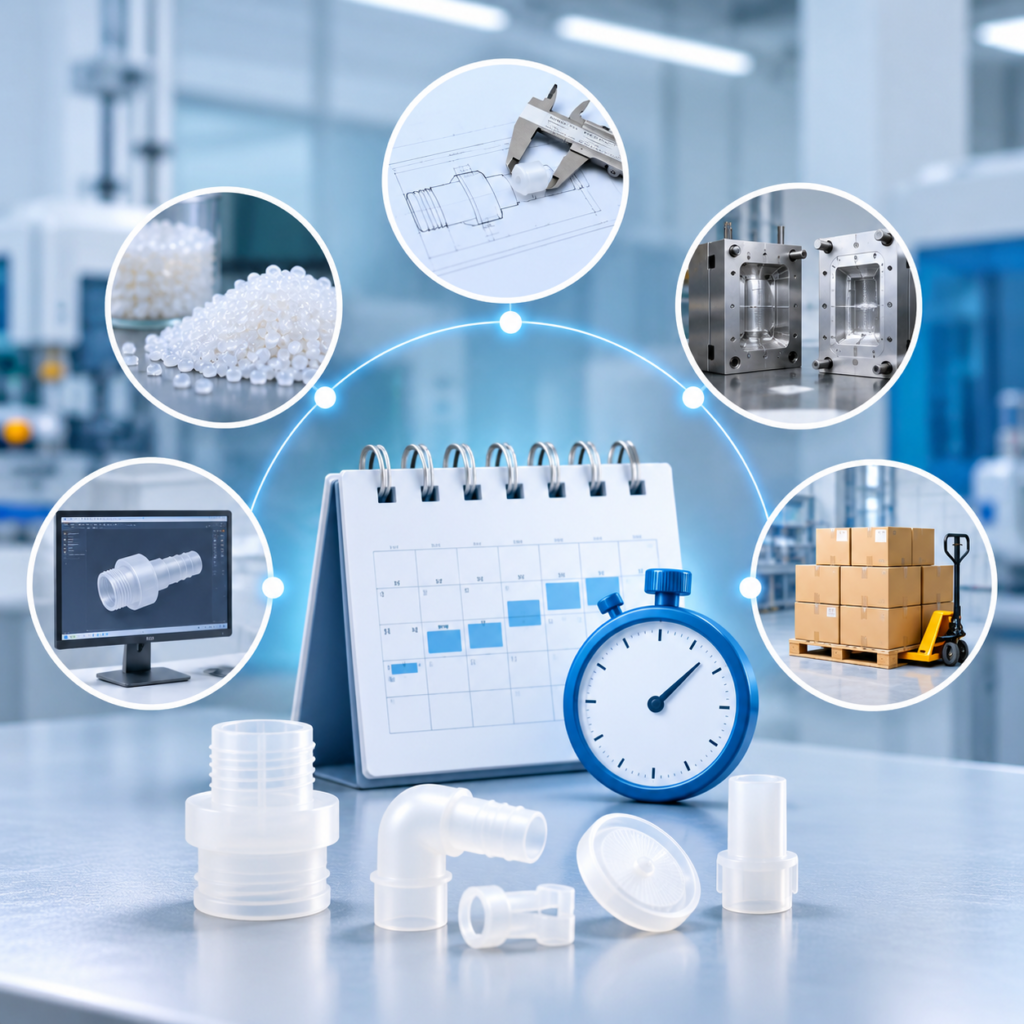
Custom plastic manufacturing lead time depends on several connected factors, including design complexity, material availability, tooling requirements, production volume, and quality validation.
A CNC-machined component may require a different production schedule from an injection-molded part that needs custom tooling. Projects involving welding or cleanroom assembly may also require additional planning.
The main factors to evaluate are:
-
Part design and engineering approval
-
Material selection and availability
-
Tooling design and fabrication
-
Prototyping and testing
-
Manufacturing method and production volume
-
Inspection, assembly, and final approval
Understanding these stages helps establish realistic project expectations.
How Does Part Design Affect Manufacturing Time?
Design decisions directly influence manufacturing preparation. Complex geometries, tight tolerances, thin walls, undercuts, and multiple assembly features may require additional engineering evaluation.
Incomplete CAD files, unclear drawings, or late design revisions can also delay production because machining programs, tooling designs, or manufacturing specifications may need updating.
Before approving a design, confirm:
-
Final CAD models and engineering drawings
-
Critical dimensions and tolerances
-
Material specifications
-
Functional and structural requirements
-
Assembly and inspection criteria
Working with an experienced team on plastic design and engineering helps identify manufacturing considerations before production begins.
Does Tooling Increase Plastic Manufacturing Lead Time?
For injection-molded components, tooling is an important part of the schedule. The mold must account for part geometry, material behaviour, production volume, and required component quality.
Tooling complexity can depend on cavity count, gate and runner configuration, cooling channels, slides, lifters, and undercuts.
Once the mold is fabricated, initial trials help evaluate material filling, part ejection, surface appearance, and dimensional results. If corrections are necessary, additional tooling work and validation may be required.
This is why manufacturers should consider tooling development and trial requirements when planning custom plastic molding.
How Do Material Selection and Availability Affect Lead Time?
The selected polymer influences processing conditions, component performance, and material sourcing requirements.
Some engineering-grade plastics and specialty compounds may require additional procurement or qualification compared with readily available materials.
Before confirming the schedule, consider:
-
Exact resin grade and manufacturer specifications
-
Supplier availability and sourcing requirements
-
Material certifications and documentation
-
Application-specific testing
-
Processing and preparation requirements
Changing materials after design approval may also require engineering reviews or additional validation. Finalizing material specifications early helps avoid unnecessary changes.
How Do Prototyping and Testing Affect Production Readiness?
A prototype provides an opportunity to identify design or functional problems before committing to production tooling or larger quantities.
CNC-machined prototypes can help evaluate dimensions and fit, while 3D-printed prototypes may be useful for assessing form and assembly.
Depending on the application, testing may include dimensional inspection, mechanical evaluation, fit checks, material verification, and environmental testing.
If a prototype fails to meet requirements, design revisions and additional testing may be necessary. Including review and approval stages in the project schedule helps prevent unexpected delays.
Explore rapid prototyping services to understand how prototype development supports design evaluation.
How Do Manufacturing Methods and Production Volume Affect Lead Time?
The right manufacturing method depends on component geometry, material, quantity, tolerances, and application requirements.
CNC plastic machining can be suitable for precision components, prototypes, and lower-volume requirements. Injection molding is often considered for repeatable production volumes where investment in tooling is justified.
Blow molding, plastic welding, and additional assembly operations may also be required depending on the component.
Production planning should account for machine availability, setup, processing, inspection, secondary operations, and packaging. Precision CNC plastic machining is one option for projects requiring accurately machined plastic components.
How Can You Reduce Custom Plastic Manufacturing Delays?
A realistic schedule starts with clear requirements and timely decisions.
Consider these practical steps:
-
Finalize CAD files and engineering drawings before production approval.
-
Confirm material grades and availability early.
-
Select the manufacturing method based on geometry and production volume.
-
Identify critical tolerances and inspection requirements.
-
Plan prototype reviews and approval stages.
-
Communicate design changes before they affect tooling or production.
-
Discuss production capacity, dependencies, and delivery expectations with your manufacturer.
These steps help engineering, procurement, and production teams work toward the same schedule.
Why Choose Foxx Technologies for Custom Plastic Manufacturing?
Selecting a manufacturing partner requires more than evaluating production capabilities.You also need engineering support, manufacturing expertise, quality processes, and coordination across different production stages.
Foxx Technologies brings plastic design, prototyping, CNC machining, injection and blow molding, plastic welding, and Class 7 cleanroom assembly capabilities together.
Rather than coordinating separate providers for every operation, customers can discuss multiple stages of their project with one manufacturing partner. This integrated approach can simplify communication and help identify potential manufacturing challenges earlier.
Foxx serves aerospace, industrial, automotive, defense, electronics, and retail applications, with manufacturing operations in the USA and India. Its website also highlights more than 15 years of ISO 13485 certification experience.
For projects requiring controlled assembly environments, explore Foxx’s cleanroom assembly capabilities.
Planning a custom plastic manufacturing project? Share your component requirements, CAD drawings, material specifications, and target production schedule with Foxx Technologies to discuss the right manufacturing approach for your application.
Frequently Asked Questions
1. How long does custom plastic part manufacturing take?
Custom plastic part manufacturing lead time depends on part complexity, material availability, tooling requirements, prototyping, testing, and production volume. A simple machined component may follow a different schedule from an injection-molded part that requires new tooling and validation. The most reliable estimate comes after reviewing the design, specifications, manufacturing process, and quality requirements.
2. What causes delays in custom plastic manufacturing?
Common causes include incomplete engineering drawings, design changes, complex tooling, material sourcing delays, prototype revisions, testing requirements, and production scheduling constraints. Late changes to dimensions, tolerances, or material specifications can also require additional engineering or tooling work.
3. Does injection molding take longer than CNC plastic machining?
Not necessarily. CNC plastic machining can be suitable for prototypes and lower-volume parts because it may not require a dedicated mold. Injection molding requires tooling development, mold trials, and process validation, which can extend the initial project schedule. However, once tooling is ready, injection molding can support repeatable production at higher volumes. The right choice depends on part design, quantity, and project requirements.
4. How does tooling affect custom plastic manufacturing lead time?
Tooling affects the schedule through mold design, fabrication, complexity, and testing. Features such as undercuts, slides, lifters, multiple cavities, and complex cooling channels can add engineering and manufacturing work. Mold trials may also identify changes needed before the part meets its required specifications.
5. How can manufacturers reduce custom plastic part production delays?
Manufacturers can reduce avoidable delays by providing complete CAD files and engineering drawings, confirming material and tolerance requirements early, selecting a suitable manufacturing process, and planning prototype testing before production. Working with a manufacturing partner that can coordinate design, prototyping, machining, molding, and assembly can also reduce communication gaps between project stages.

I was skeptical at first but this place is legit. Smooth transactions and a great variety of options to choose from. pk1777xs
Super intuitive layout and the customer support is actually helpful. I’m loving the service at phonejoyph.
Found this place through a friend and I am glad I did. The odds are competitive and the registration process was a breeze. I am sticking with krzxxbet for a while.
Really impressed with the user interface. Everything is so easy to find and the loading speed is top notch. Love phaaajili7!