Selecting the right industrial plastic manufacturing process is not a one-size-fits-all decision. Every application comes with its own set of demands whether that means tight dimensional tolerances, chemical resistance, high-volume output, or contamination-free assembly. Making the wrong choice early in your project can lead to rework, delays, and unnecessary costs. This guide breaks down the most common plastic manufacturing processes, how they work, and how to match them to your specific industrial needs.
What Is Industrial Plastic Manufacturing and Why Does It Matter?
Industrial plastic manufacturing refers to the set of engineering processes used to produce durable, functional plastic components for use in industrial environments. These environments are often demanding components may face repeated mechanical stress, exposure to chemicals, elevated temperatures, or strict hygiene requirements. Choosing the right process ensures your custom plastic parts perform reliably under these conditions without failure.
The process you select affects more than just the final product. It directly influences your per-unit cost, production timeline, material choices, and ability to scale. For procurement managers, design engineers, and production leads, understanding the landscape of available processes is a practical necessity not just a technical nicety. Industries ranging from aerospace to automotive, defense, electronics, and industrial manufacturing all depend on these decisions being made correctly the first time.
How Each Plastic Manufacturing Process Works
There are several well-established plastic manufacturing processes used in industrial applications, each suited to different geometries, volumes, and material requirements. Here is a practical breakdown of the main options.
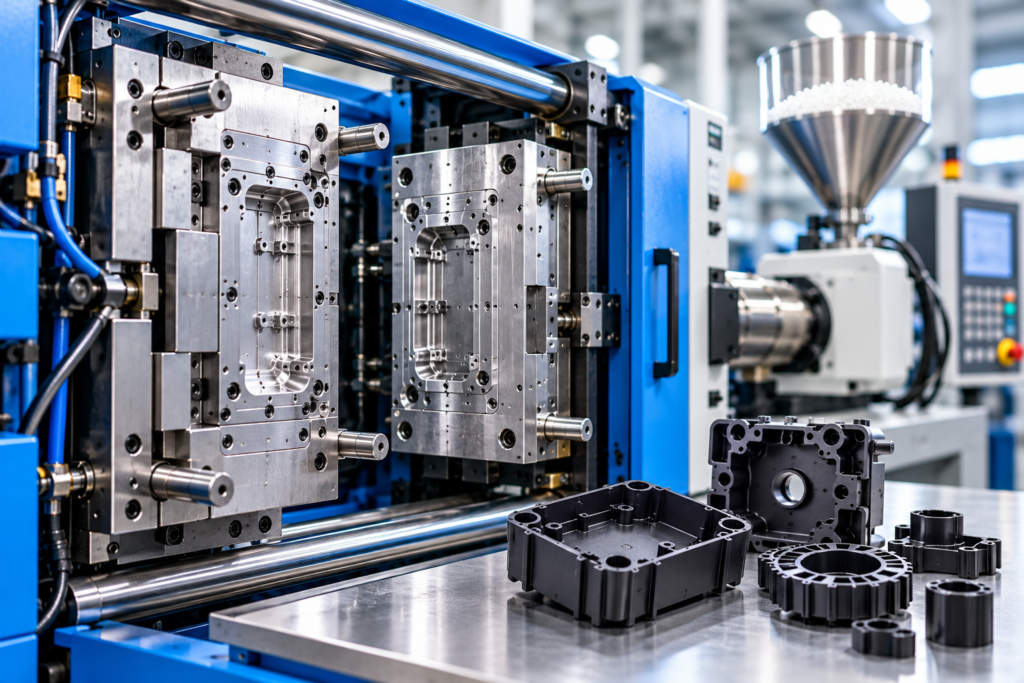
Plastic Molding specifically injection molding and blow molding is one of the most widely used plastic molding techniques for high-volume production. A molten plastic material is injected into a precision-machined mold cavity, cooled, and ejected as a finished part. This process delivers consistent quality across thousands or even millions of parts and is ideal when your design is finalized and production volume is high.
Plastic Machining uses CNC and manual equipment to cut, mill, drill, or turn plastic stock into finished components. CNC plastic machining is best suited for low-to-medium volume runs, complex geometries, and situations where tooling costs for molding are not justified. It also allows quick iteration without committing to expensive tooling.
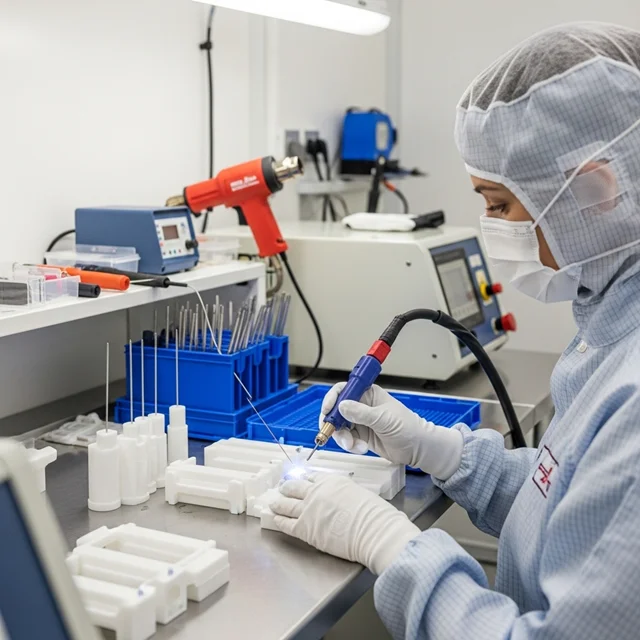
Plastic Welding including ultrasonic welding techniques creates permanent, leak-proof joints between plastic components. Plastic welding is especially relevant for enclosures, fluid-handling assemblies, and sealed housings that need to withstand pressure or environmental exposure in demanding industrial settings.
Prototyping bridges the gap between design and production. Rapid plastic prototyping allows design teams to validate form, fit, and function before investing in production tooling. This step significantly reduces the risk of costly revisions downstream.
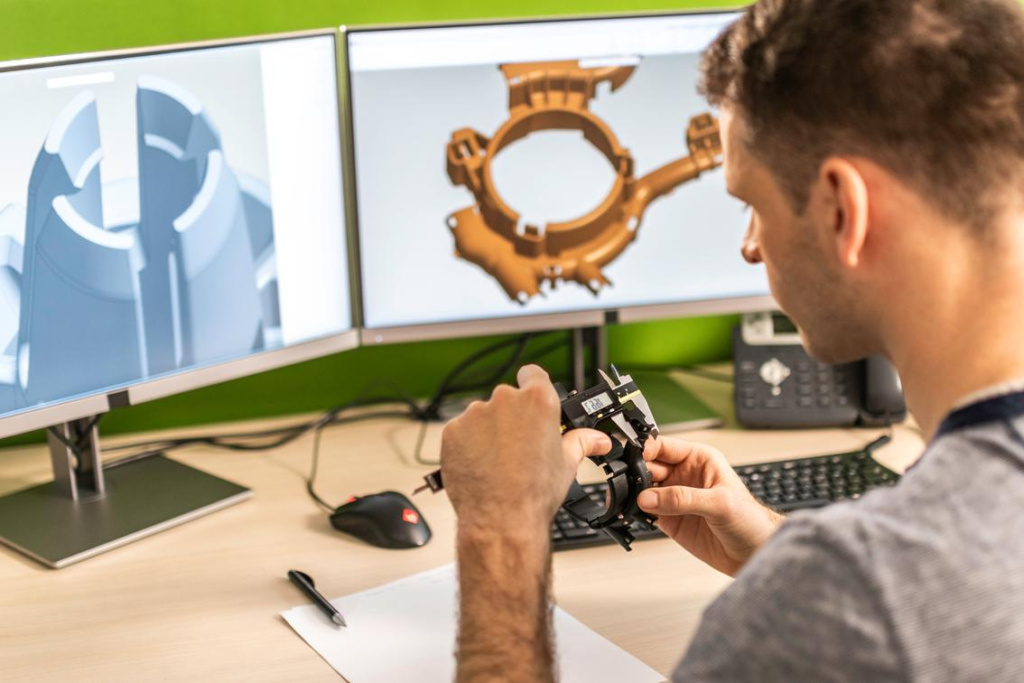
Plastic Design services take your concept and translate it into a manufacturable specification. Experienced plastic design engineers consider draft angles, wall thickness, material selection, and assembly methods to optimize your component for whichever manufacturing process follows.
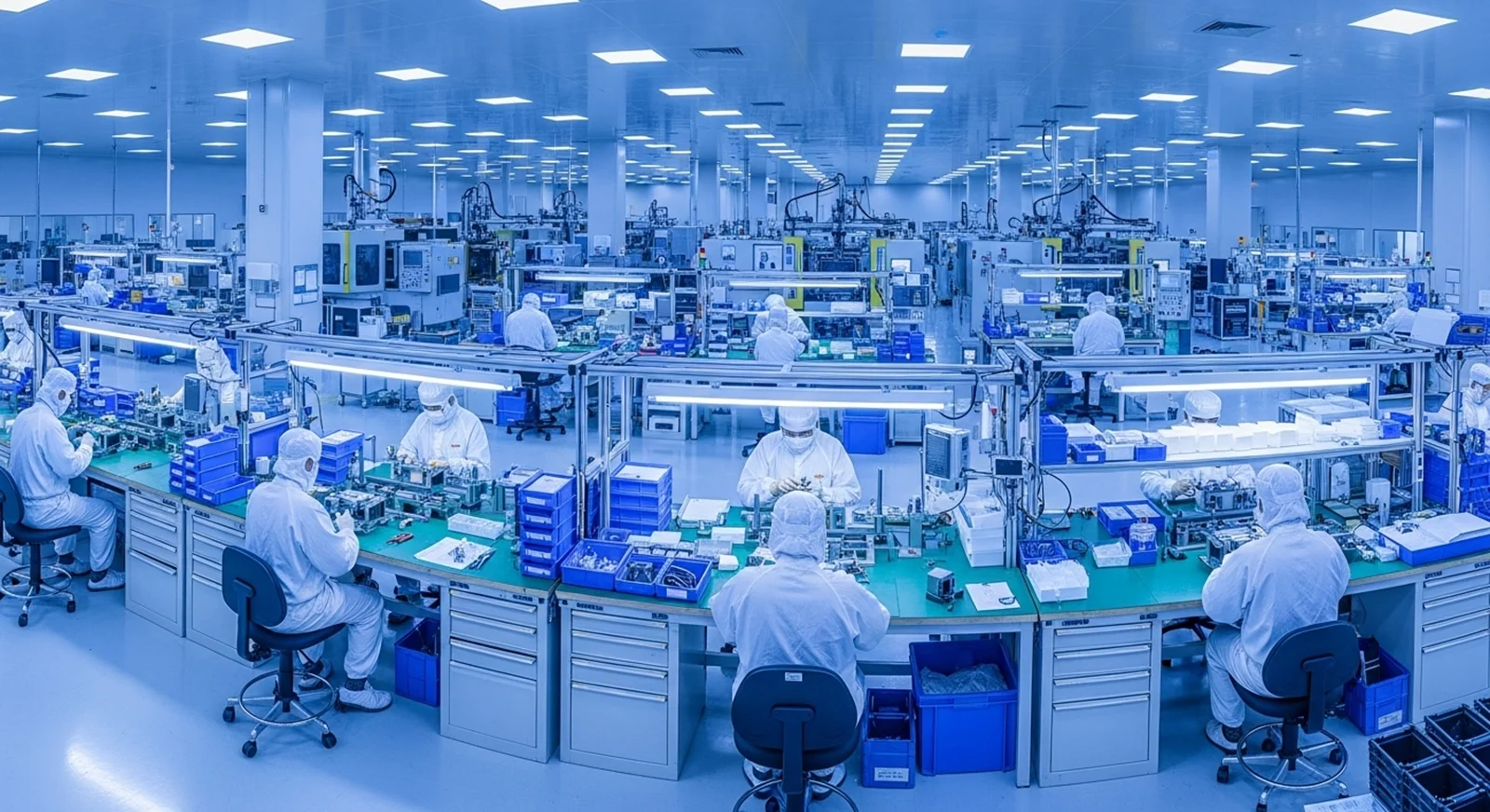
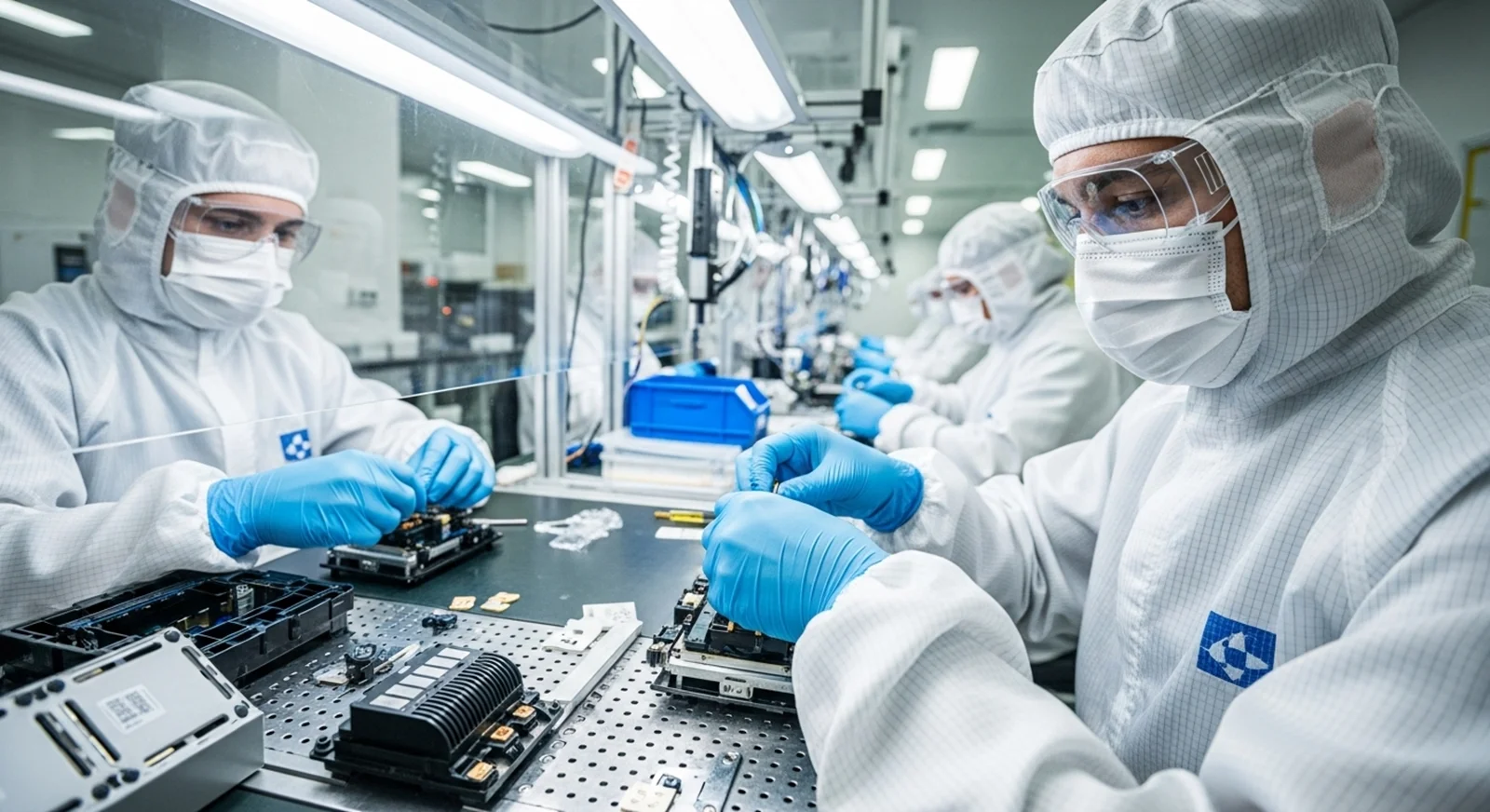
Cleanroom Assembly is a specialized step required when your application demands contamination-free production. ISO-certified cleanroom assembly environments are critical for electronics, medical devices, and precision industrial systems where even microscopic particles can compromise performance.
Key Benefits of Choosing the Right Process
When the manufacturing method is matched correctly to the application, the benefits are measurable and immediate. The right industrial plastic manufacturing process reduces scrap rates, lowers per-unit cost at scale, shortens lead times, and ensures that your components meet the mechanical and regulatory requirements of your industry.
Scalable plastic molding processes can absorb large order volumes without sacrificing dimensional consistency. CNC plastic machining delivers tight tolerances where molds would be prohibitively expensive. Plastic welding eliminates the need for adhesives or mechanical fasteners that can fail under vibration or thermal cycling. Collectively, these options give industrial buyers a versatile toolkit to source custom plastic parts that are fit for purpose not just close enough.
Comparison and Use Cases: Which Process Fits Your Application?
Not every process is right for every job. Here is a practical comparison to help you decide based on your real-world application requirements.
-
Injection Molding : Best for: high-volume, repeatable parts with complex geometries. Applications: housings, brackets, connectors, enclosures.
-
CNC Plastic Machining : Best for: low-volume runs, prototypes, tight tolerances. Applications: jigs, fixtures, custom components, replacement parts.
-
Plastic Welding : Best for: sealed assemblies, fluid-handling, structural joins. Applications: tanks, manifolds, enclosures, medical device bodies.
-
Prototyping : Best for: design validation before production. Applications: form-fit-function testing, stakeholder review models.
-
Cleanroom Assembly : Best for: contamination-sensitive applications. Applications: electronics, precision sensors, pharmaceutical equipment.
For industrial applications that span multiple stages from initial design through final assembly combining these processes through a single, experienced plastic manufacturing partner is often the most efficient path.
What to Look for in an Industrial Plastic Manufacturing Partner
When evaluating suppliers for industrial plastic components, there are several non-negotiable criteria. First, look for end-to-end capability a partner that can handle design, prototyping, molding, machining, welding, and cleanroom assembly removes the coordination overhead of managing multiple vendors.
Second, verify quality certifications. ISO compliance and certified cleanroom capabilities indicate a supplier that takes process control seriously. Third, assess their scalability can they match your volume today and grow with your demand tomorrow? Finally, look for demonstrated experience in your specific industry, whether that is aerospace, defense, automotive, or general industrial manufacturing.
About Foxx Technologies
Foxxtechnologies is a 15+ year ISO 13485 certified end-to-end plastic manufacturing partner with Class 7 cleanrooms across four locations in the USA and India. From plastic design and prototyping to injection molding, CNC plastic machining, ultrasonic plastic welding, and cleanroom assembly they deliver scalable, compliant industrial plastic solutions from a single source. Learn more at
Frequently Asked Questions
Q: What is the most cost-effective plastic manufacturing process for small production runs?
A: CNC plastic machining is typically the most cost-effective option for low-volume runs because it requires no tooling investment. You get finished custom plastic parts quickly without upfront mold costs, making it ideal for prototypes or batches under a few hundred units.
Q: How do I know if injection molding is right for my industrial application?
A: Injection molding makes the most sense when you need high volumes of consistent, complex-geometry parts. If your annual volume exceeds a few thousand units and your design is finalized, the per-unit cost savings of plastic molding will typically outweigh the upfront tooling investment within the first production run.
Q: What industries require cleanroom assembly for plastic components?
A: Industries that routinely require ISO-certified cleanroom assembly include medical devices, electronics, semiconductors, pharmaceutical equipment, and precision defense systems. Any application where airborne particles could compromise component integrity or regulatory compliance will benefit from controlled-environment production.
Q: Can plastic welding replace mechanical fasteners in industrial assemblies?
A: In many cases, yes. Plastic welding particularly ultrasonic welding creates permanent, structurally sound, leak-proof bonds that eliminate fastener-related failure points. It is widely used in sealed housings, fluid-handling components, and assemblies subject to vibration or thermal expansion in demanding industrial plastic manufacturing environments.
Q: Why is prototyping an essential step before full plastic production?
A: Skipping plastic prototyping is one of the most common and expensive mistakes in product development. A prototype lets you validate your design for form, fit, and function before committing to production tooling. Catching a design flaw at the prototype stage can save tens of thousands of dollars in mold rework or redesign costs.