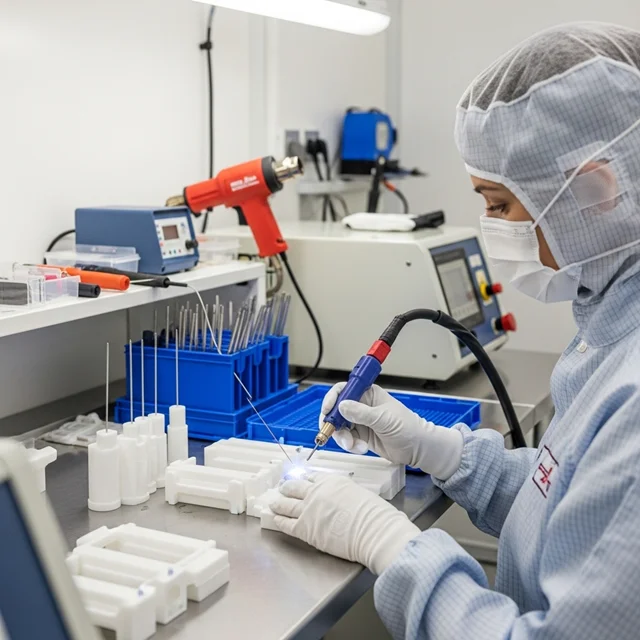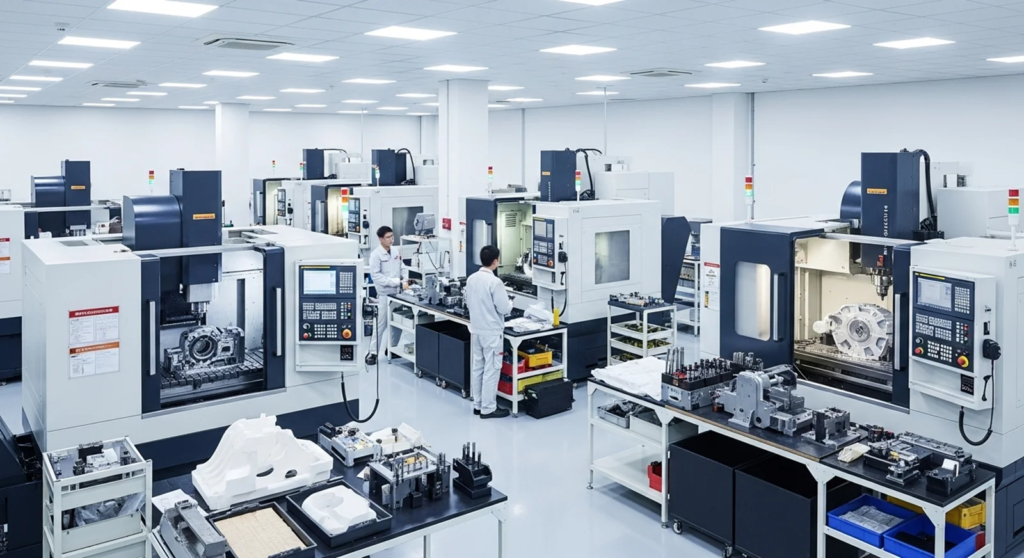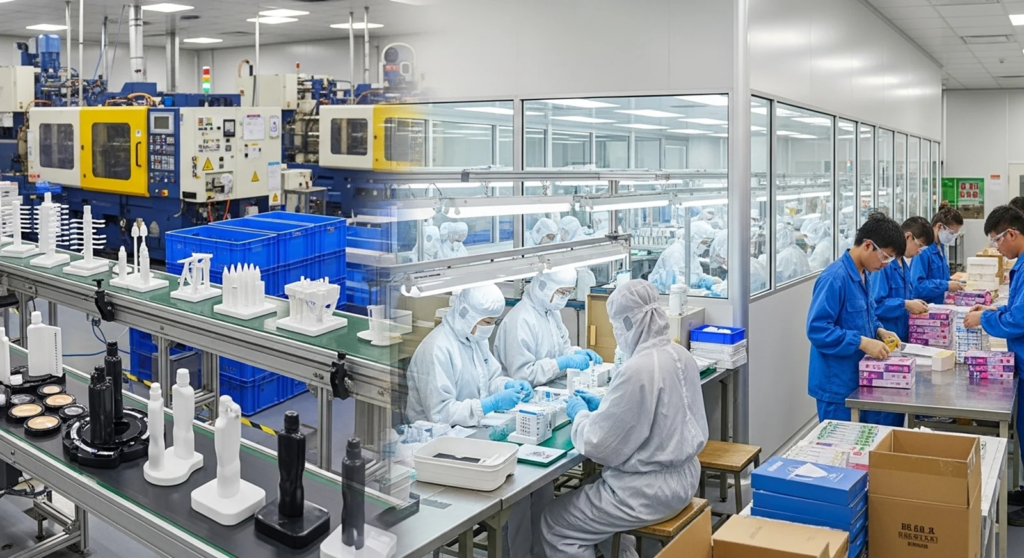
Plastic welding is an important manufacturing process for joining thermoplastic components into strong, permanent assemblies. It is widely used when manufacturers need reliable seals, structural strength, chemical resistance, dimensional accuracy, and lightweight construction. From aerospace and automotive components to industrial equipment, electronics, and defense applications, the right plastic welding process can help improve the performance and durability of finished products.
Unlike mechanical fastening, plastic welding joins compatible thermoplastic materials by creating a fused joint. Depending on the component design and application, manufacturers can select from several welding technologies, including extrusion, hot gas, speed tip, ultrasonic, hot plate, infrared, and laser welding.
What Is Plastic Welding?
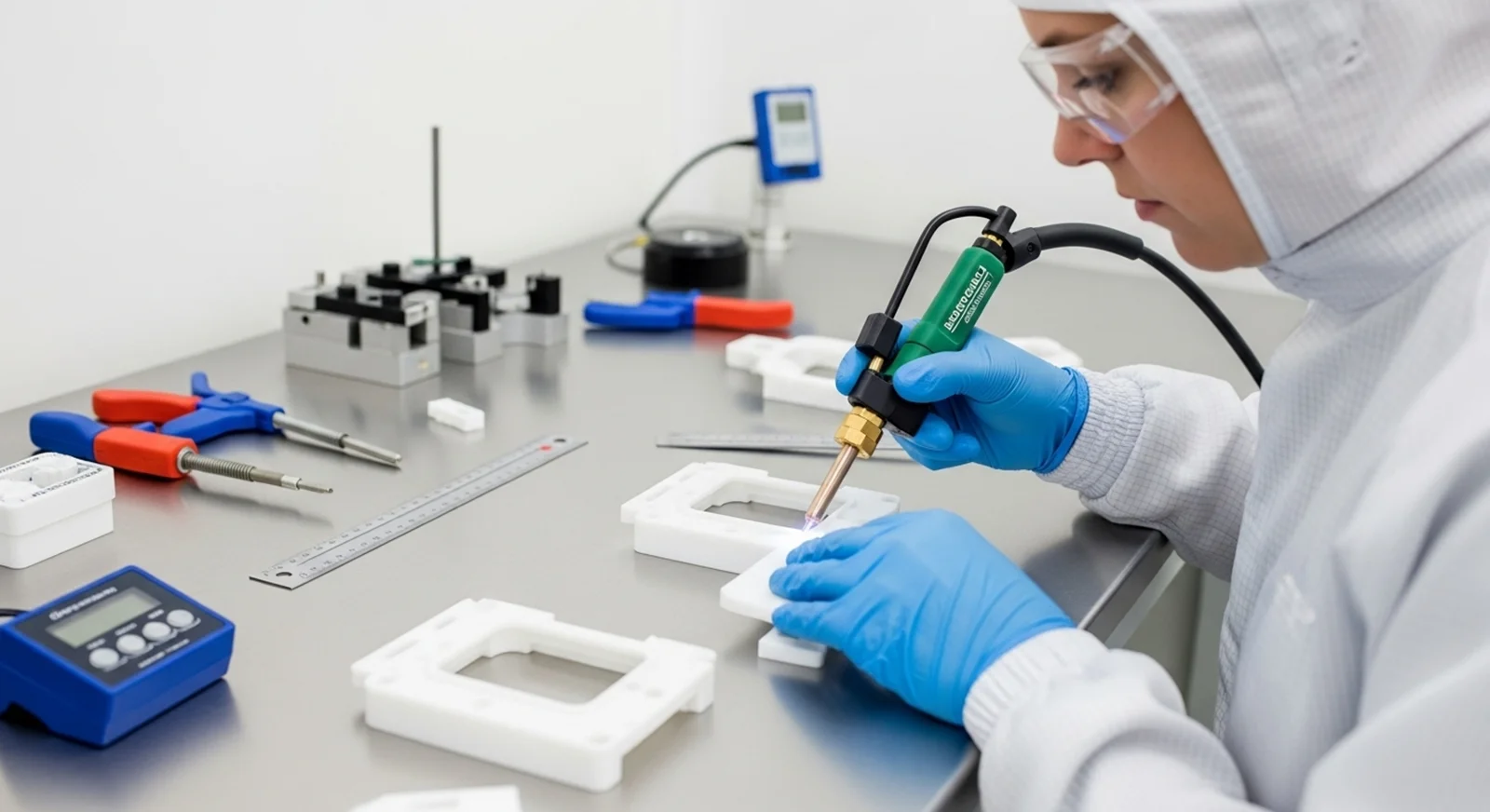
Plastic welding is a manufacturing technique that joins compatible thermoplastic parts using controlled heat, pressure, friction, vibration, or another energy source. The surfaces are softened and brought together so they form a permanent joint.
The welding method depends on factors such as plastic type, component geometry, wall thickness, joint design, production volume, required strength, and operating environment.
For manufacturers working with complex components, precision plastic welding can provide an alternative to adhesives, screws, rivets, and other mechanical joining methods.
Why Is Plastic Welding Important?
Modern manufacturers increasingly require components that are lightweight, durable, chemically resistant, and capable of maintaining reliable seals. Plastic welding can address these requirements while reducing the number of additional joining materials needed.
A properly engineered welded joint can provide a permanent connection and help reduce potential failure points associated with separate fasteners or adhesive systems. The process can also accommodate irregular and complex component geometries when the appropriate welding technology and fixturing are used.
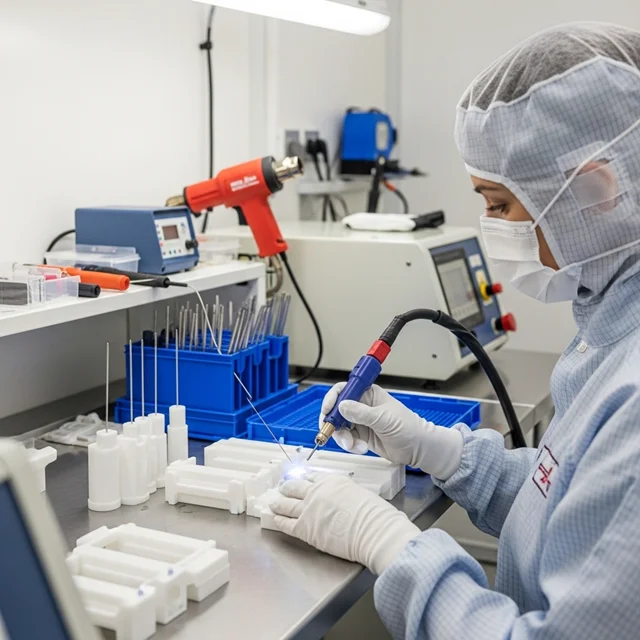
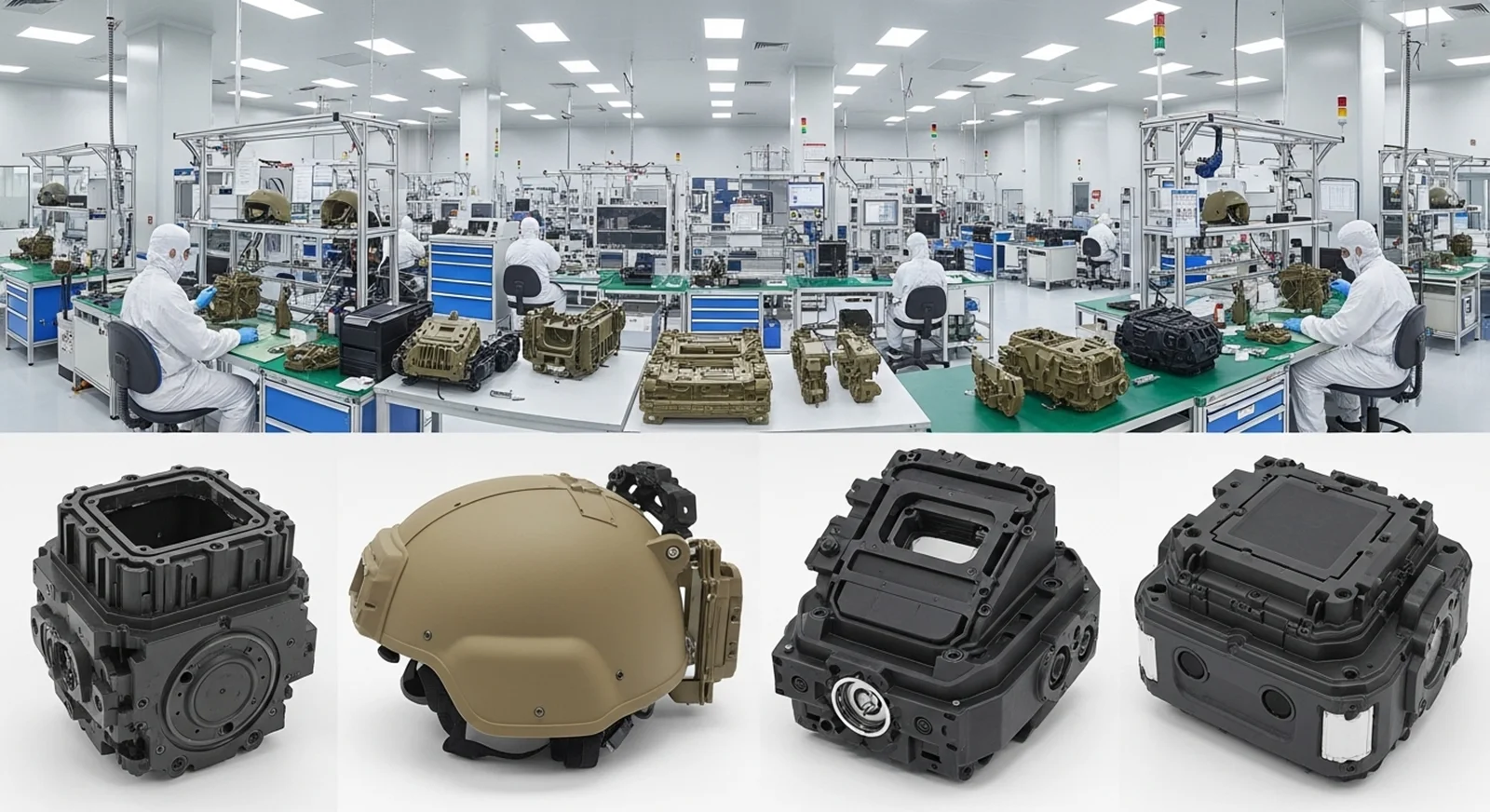
For applications where contamination control is critical, cleanroom-compatible plastic welding can provide an additional manufacturing solution. The service page describes Class 7 validated cleanroom welding capabilities for applications requiring controlled manufacturing environments.
Common Plastic Welding Processes
Extrusion Welding
Extrusion welding introduces compatible thermoplastic material into a prepared joint. It can be useful for larger components, fabrication work, and applications requiring additional welding material.
Hot Gas Welding
Hot gas welding uses heated gas to soften thermoplastic surfaces before they are joined. It can be suitable for fabricated plastic components and specialized assemblies.
Speed Tip Welding
Speed tip welding is designed for controlled, efficient joining of thermoplastic parts, particularly where precision and access to the joint are important.
Ultrasonic Welding
Ultrasonic welding uses high-frequency mechanical vibrations to create localized heat and join compatible plastic components. It is particularly useful for precision assemblies requiring repeatable results.
Hot Plate and Infrared Welding
Hot plate and infrared processes can provide controlled and uniform heat distribution. These techniques can be useful for large, thick-walled, or geometrically challenging components.
Laser Welding
Laser welding provides a non-contact joining method for applications requiring tight tolerances and minimal thermal distortion. It can also be useful where particulate control is important.
Benefits of Plastic Welding
Plastic welding provides several advantages for product manufacturers:
-
Permanent joints: Welded connections can provide long-term structural integrity.
-
Reduced consumables: Depending on the process, manufacturers may reduce the need for adhesives, fasteners, solvents, or rivets.
-
Lightweight construction: Eliminating unnecessary mechanical hardware can help reduce assembly weight.
-
Complex geometries: Specialized welding methods can accommodate curved and irregular components.
-
Leak-resistant assemblies: Properly designed welds can support sealed applications.
-
Production flexibility: Welding technologies can support prototypes as well as larger-scale production.
-
Design freedom: Manufacturers can select different welding technologies according to material and component requirements.
These benefits make plastic welding a practical option for many industrial joining applications.
Which Plastics Can Be Welded?
Thermoplastic selection is an important part of successful plastic welding. Materials referenced for welding applications include polypropylene (PP), polyvinyl chloride (PVC), chlorinated polyvinyl chloride (CPVC), polyvinylidene fluoride (PVDF), and polytetrafluoroethylene (PTFE). Each material has different thermal, chemical, and mechanical characteristics, so compatibility must be considered before selecting a welding process.
For example, polypropylene is known for chemical resistance and flexibility, while PVDF is valued for strength and resistance to harsh chemicals. The final material choice should depend on the component’s operating environment and performance requirements.
Industrial Applications of Plastic Welding
Plastic welding is used across several industries where durable and precision-engineered components are required.
Aerospace: Applications can include ducts, tanks, cockpit-related components, and other lightweight assemblies.
Automotive: Welded plastic components can be used in fuel systems, bumpers, dashboards, door components, and other vehicle assemblies.
Industrial: Storage tanks, piping systems, machinery components, and fluid-handling equipment can benefit from welded thermoplastic construction.
Electronics: Plastic welding can be used for protective housings, enclosures, circuit-board holders, and other components requiring secure protection.
Defense: Durable equipment casings, vehicle components, and specialized storage systems are examples of potential applications.
Why Choose Foxx Technologies for Plastic Welding?
Foxx Technologies is important for manufacturers that need more than a basic welding operation. Its capabilities combine plastic welding with design, prototyping, machining, molding, precision fixturing, assembly integration, and cleanroom-compatible production.
The company states that it performs strength, leak, and seal-integrity testing to evaluate welded joints and support consistent performance. Its manufacturing capabilities extend across the USA and India, while its service offering covers aerospace, industrial, automotive, defense, electronics, and retail applications.
This integrated approach can help manufacturers move from early-stage product development toward production while coordinating multiple plastic manufacturing requirements.
How to Select the Right Plastic Welding Service
Before choosing a supplier, consider the thermoplastic material, component dimensions, wall thickness, joint design, required tolerances, production volume, environmental conditions, and cleanliness requirements.
It is also useful to determine whether the supplier can provide prototyping, custom fixturing, assembly integration, and validation testing. These capabilities can help identify potential welding issues before full-scale production.
For demanding applications, a manufacturing partner with design-to-production capabilities can simplify development and provide greater consistency throughout the manufacturing process.
Frequently Asked Questions
1. What is plastic welding used for?
Plastic welding is used to permanently join compatible thermoplastic components. Common applications include tanks, ducts, piping, housings, automotive parts, industrial equipment, electronics enclosures, and specialized assemblies.
2. What are the main types of plastic welding?
Common processes include extrusion welding, hot gas welding, speed tip welding, ultrasonic welding, hot plate welding, infrared welding, and laser welding. The appropriate process depends on the material and component requirements.
3. What plastics are suitable for welding?
Common thermoplastics used in welding applications include polypropylene, PVC, CPVC, PVDF, and PTFE. Material compatibility and the operating environment should be evaluated before selecting the welding method.
4. Can plastic welding create leak-resistant components?
Yes. Properly designed and validated welded joints can be used for applications where leak and seal integrity are important. Strength, pressure, and seal testing can be used to evaluate the finished joint.
5. Is plastic welding suitable for cleanroom manufacturing?
Yes. Cleanroom-compatible plastic welding can be used for applications requiring controlled manufacturing environments. The referenced service provides Class 7 validated cleanroom welding capabilities.
Conclusion
Plastic welding provides manufacturers with a flexible method for creating strong, lightweight, and permanent thermoplastic assemblies. Choosing the correct process requires careful consideration of material compatibility, component geometry, joint requirements, production volume, and operating conditions.
For complex projects, combining plastic welding with engineering, prototyping, machining, molding, fixturing, assembly, and validation can provide a more complete path from concept to production.