The electronics industry runs on precision. Whether it is a consumer device, industrial controller, or medical-grade electronic module, the plastic components that make up enclosures, connectors, housings, and structural parts are expected to perform without failure across thousands of production cycles. Choosing the wrong manufacturing partner at any stage from design to final assembly can cost your project months of rework, unnecessary spend, and damaged reputation. This guide breaks down exactly what to look for when selecting a plastic manufacturer for the electronics industry, so your procurement and engineering teams can make faster, more confident decisions.
Why Plastic Component Quality Directly Impacts Electronics Performance
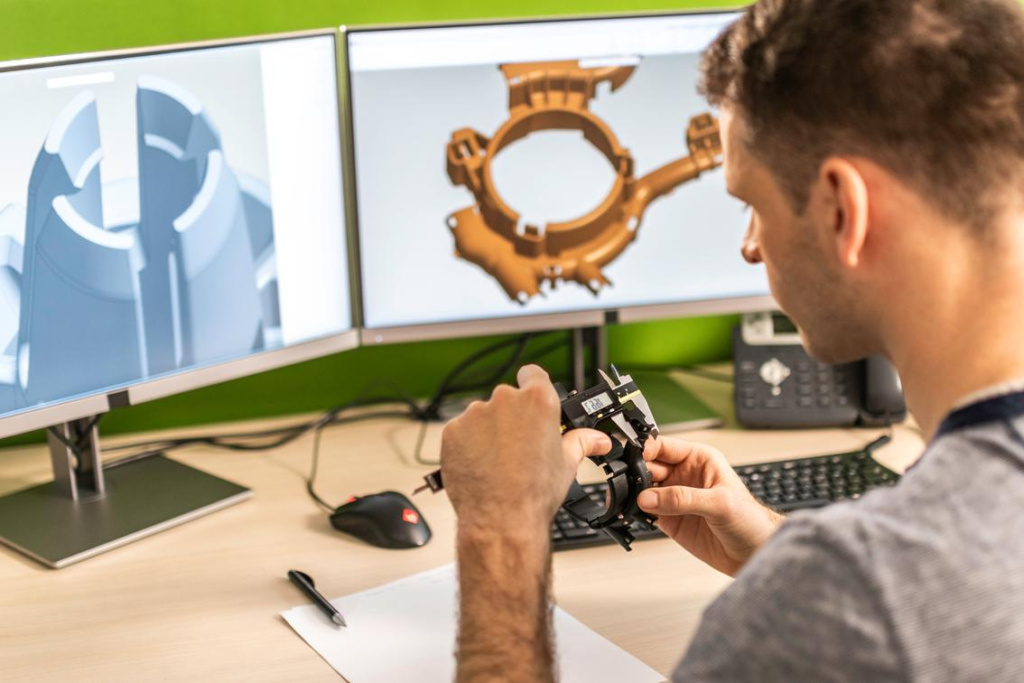
In electronics manufacturing, tolerances are tight. A housing that does not snap-fit correctly, a connector housing that warps under heat, or an enclosure that fails IP ingress testing all of these trace back to how well your supplier manages material selection, tooling, and process control. The right plastic designing & engineering partner does not simply manufacture what you hand them. They get involved early in the product development cycle, challenge assumptions in the design, flag DFM (Design for Manufacturability) issues, and optimize wall thickness, draft angles, and gating strategies before a single tool is cut. This upstream collaboration is what separates a supplier from a true manufacturing partner.
Beyond design, you need a partner whose production floor capabilities match your volume and specification requirements. Verify that they operate with documented quality management systems, maintain calibrated tooling, and can consistently hold tight dimensional tolerances across production batches. These are not optional requirements for electronics-grade work they are the baseline.
Plastic Designing & Engineering: Start Here, Not at Production
Most electronics OEMs make the mistake of approaching plastic suppliers too late only after the CAD model is locked and internal design reviews are complete. A capable plastic designing & engineering partner should be brought in during the concept-to-detailed-design phase. They can assess how your material selection will behave in injection molding or machining scenarios, whether your assembly geometry supports weld or snap-fit integration, and whether cleanroom assembly requirements are compatible with the proposed design architecture. Early-stage collaboration reduces costly late-stage change orders and helps you hit tighter program timelines.
When evaluating a supplier’s engineering depth, ask to see how they manage design reviews, what simulation tools they use for mold flow analysis, and whether they have in-house tooling design capability or rely entirely on third-party toolmakers. Suppliers with integrated engineering and tooling teams consistently deliver better first-article results than those who compartmentalize these functions.
Rapid Prototyping: Validating Before You Commit to Tooling
Speed to market is a constant pressure in electronics. Rapid prototyping capability is not just about 3D printing a cosmetic model it is about producing functional parts that let your engineering and testing teams validate fit, form, and function under real conditions. Look for suppliers who can offer multiple prototyping technologies including SLA, SLS, CNC-machined plastic prototypes, and bridge tooling options. The ability to iterate quickly between design revisions, test assembly interactions, and stress-test material choices before committing to production tooling is one of the highest-value services a plastic manufacturer can offer.
Evaluate how quickly a supplier can turn a functional prototype from CAD data. Top-tier partners can deliver first prototypes in days, not weeks. Also confirm that their prototyping team has direct communication with their engineering and production teams this integration is what allows feedback from prototype testing to be cleanly translated into production-ready design updates.
Plastic Molding: The Core Capability You Cannot Compromise On
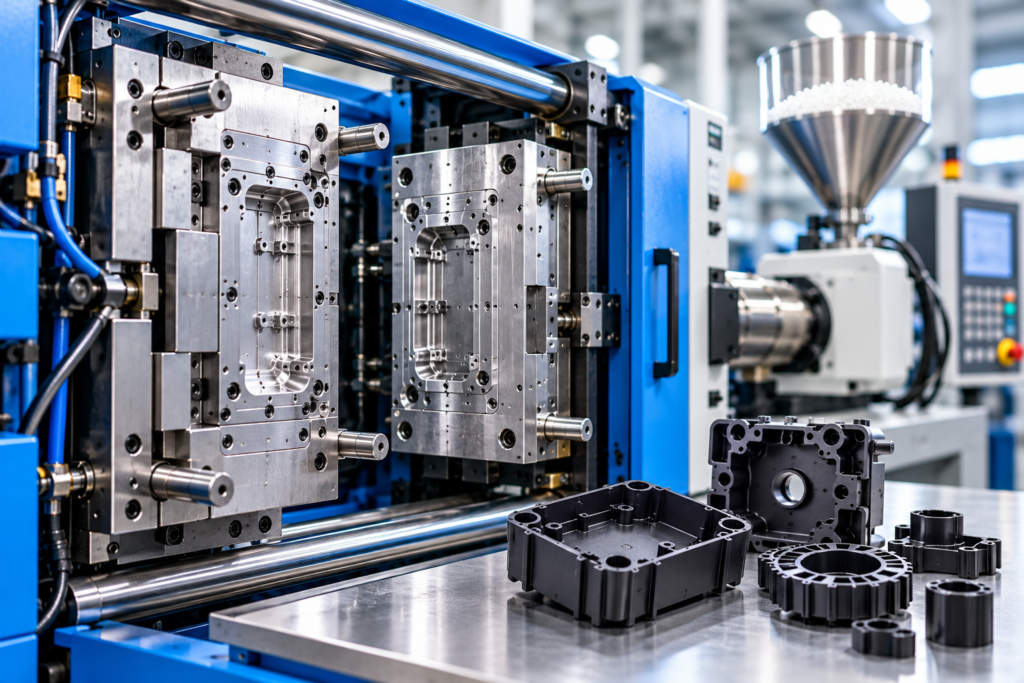
For volume production of plastic components in the electronics industry, plastic molding specifically injection molding is the workhorse process. Casings, connector housings, structural brackets, control panel faces, and internal mounting structures are all typically injection molded. Your supplier must be able to demonstrate competency in tooling design, material selection (ABS, PC, nylon, PEEK, and specialty engineering plastics), and process control. Ask for their Cpk data on critical-to-function dimensions. Ask how they manage tooling maintenance. Ask what their first-pass yield rates look like on complex multi-cavity tools.
Also consider whether the supplier offers both Class 7 and Class 8 molding capabilities, especially if your electronic device will eventually require cleanroom assembly downstream. A fully integrated facility where molded parts move directly into a cleanroom environment without repackaging or external transport reduces contamination risk and improves overall supply chain reliability.
Plastic Machining: Where Tight Tolerances and Custom Materials Meet
Plastic machining fills the gap when molding is either economically impractical (low volumes) or technically insufficient (extreme tolerances, specialty materials). CNC machining of engineering plastics like PTFE, UHMWPE, Delrin, and PEEK is a specialized skill set these materials behave differently from metals and require adjusted feeds, speeds, and fixturing strategies to achieve repeatable results. For electronics applications, precision-machined plastic parts are commonly used in test fixtures, custom connectors, precision insulators, and structural components where tight dimensional control is critical.
When evaluating a supplier’s plastic machining capability, review their available machine types (3-axis vs. 5-axis), their metrology equipment, and their experience with the specific materials your application requires. A supplier who can machine to tolerances of ±0.001″ consistently across production runs will be far more valuable to your program than one who can only achieve ±0.005″ on simple geometries.
Plastic Welding & Assembly: Sealed, Protected, and Reliable
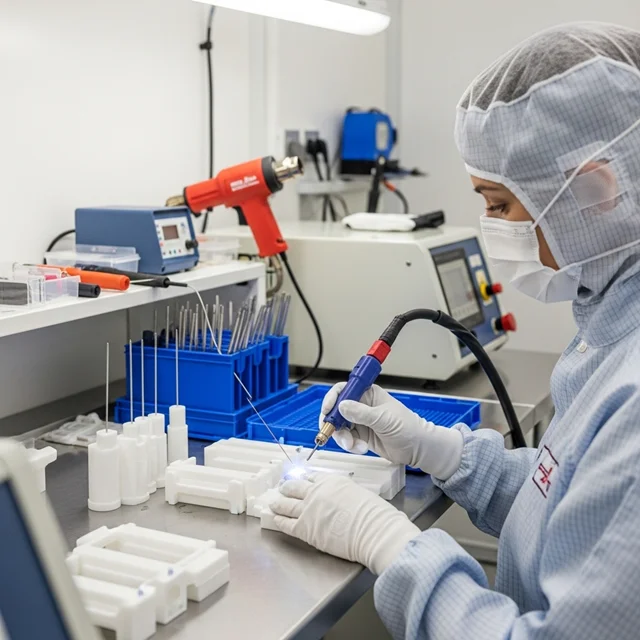
Electronic devices are frequently deployed in environments that expose them to humidity, dust, vibration, and mechanical stress. Plastic welding & assembly is how your enclosures and housings become sealed systems. Ultrasonic welding, vibration welding, laser welding, and hot-plate welding each have application-specific advantages the right technique depends on your material, geometry, and seal requirement. A qualified supplier will help you select the correct method based on joint design and functional requirements, not just what equipment they happen to own.
Evaluate whether the supplier’s plastic welding & assembly team can perform in-process quality checks such as weld strength pull testing, leak testing, and visual inspection to IPC or customer-specific workmanship standards. Assembly services that include sub-assembly of electronic components alongside plastic housing integration further reduce your supply chain touch-points and improve traceability.
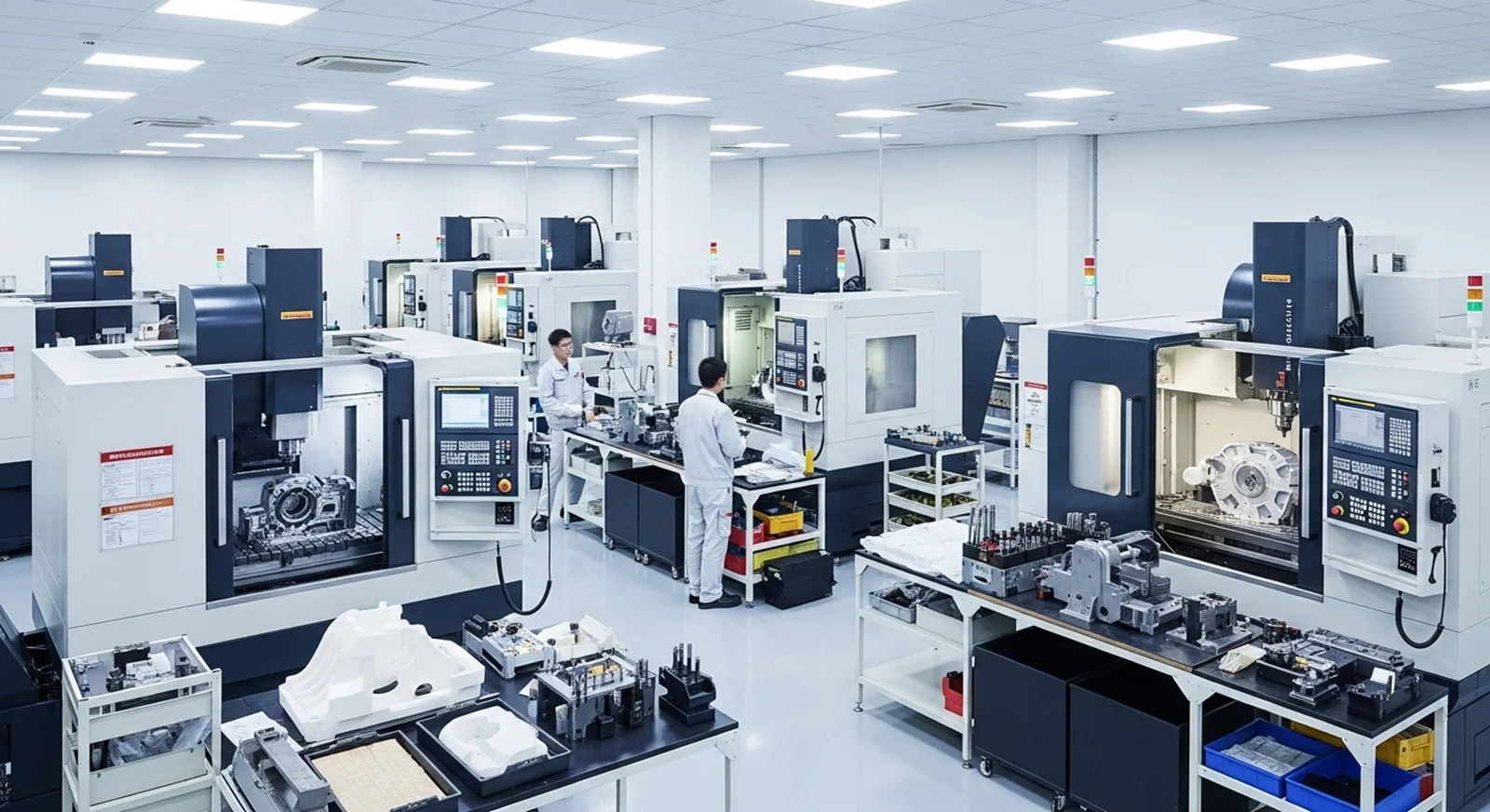
Cleanroom Assembly: The Non-Negotiable for High-Value Electronics
As electronics shrink and performance requirements tighten, cleanroom assembly has moved from a niche requirement to a standard expectation for many product categories including optical electronics, semiconductor packaging, precision sensors, and medical-grade electronics. ISO Class 7 and Class 8 cleanroom environments control particulate levels, temperature, humidity, and electrostatic discharge all of which directly affect yield and reliability in sensitive electronic assemblies.
When selecting a partner for cleanroom assembly, confirm their ISO certification level, the number and size of their cleanroom facilities, and whether their cleanroom operations are co-located with their molding and machining capabilities. A supplier who can mold, weld, and assemble entirely within a controlled environment eliminates multiple contamination risk points that exist when parts move between facilities. Also verify that their cleanroom staff are trained and certified, that gowning protocols are documented, and that environmental monitoring records are available for customer review.
Why Foxx Technologies Stands Out for Electronics Plastic Manufacturing
Foxx Technologies is an ISO 13485-certified end-to-end plastic manufacturing partner with 15+ years of experience serving the electronics sector across the USA and India. With seven Class 7 cleanrooms across four locations, integrated capabilities spanning plastic designing & engineering, rapid prototyping, plastic molding, plastic machining, plastic welding & assembly, and cleanroom assembly, Foxx eliminates multi-vendor complexity and accelerates time-to-market. Their single-partner model ensures seamless quality control from design through final cleanroom assembly for demanding electronics applications.
Quick Evaluation Checklist When Shortlisting a Plastic Partner for Electronics
-
Design & Engineering: In-house DFM review, mold flow simulation, and integrated tooling design capability
-
Rapid Prototyping: Multiple prototyping technologies available with fast-turn lead times
-
Plastic Molding: Proven injection molding for engineering plastics with documented process Cpk
-
Plastic Machining: CNC capability for tight-tolerance specialty materials (PEEK, PTFE, Delrin, etc.)
-
Welding & Assembly: Multiple weld processes offered with in-process weld strength and leak testing
-
Cleanroom Assembly: ISO Class 7/8 certified rooms, co-located with production, environmental records available
-
Quality System: ISO 9001 or ISO 13485 certified, documented QA/QC procedures, PPAP/FAI capability
-
Scalability: Can support both low-volume/prototype and high-volume production runs
Frequently Asked Questions
Q1: What is the most important capability to verify when selecting a plastic manufacturer for electronics?
Cleanroom assembly and plastic molding process control are the most critical. Confirm ISO certification, Cpk data on key dimensions, and whether cleanroom operations are co-located with molding this eliminates contamination risks and ensures part integrity from production through final assembly.
Q2: When should rapid prototyping be used in an electronics development program?
Rapid prototyping should be used before cutting production tooling. It validates design intent, tests fit and function and allows fast design iteration. Functional prototypes that match production material behavior give engineering teams real-world data to refine designs before committing to expensive production tooling.
Q3: Which plastic welding method is best for sealed electronics enclosures?
Ultrasonic welding is the most common choice for rigid thermoplastic enclosures requiring hermetic or near-hermetic seals. Laser welding is preferred for precision or complex geometries. The right method depends on material type, joint design, and required seal class a qualified supplier will guide this selection early in the design phase.
Q4: What is the difference between Class 7 and Class 8 cleanroom assembly for electronics?
ISO Class 7 cleanrooms allow a maximum of 352,000 particles ≥0.5μm per cubic meter; Class 8 allows 3.52 million. Class 7 is required for more sensitive assemblies such as precision optical electronics and medical-grade modules. Class 8 suits general electronics assembly where moderate contamination control is needed.
Q5: How does plastic machining complement plastic molding in electronics manufacturing?
Plastic machining is used for low volume runs, functional prototypes, and parts requiring tolerances tighter than molding can achieve reliably. CNC-machined specialty plastics like PEEK and PTFE are common in electronics test fixtures, precision insulators, and custom connector components where molding tooling investment is not justified by volume.