
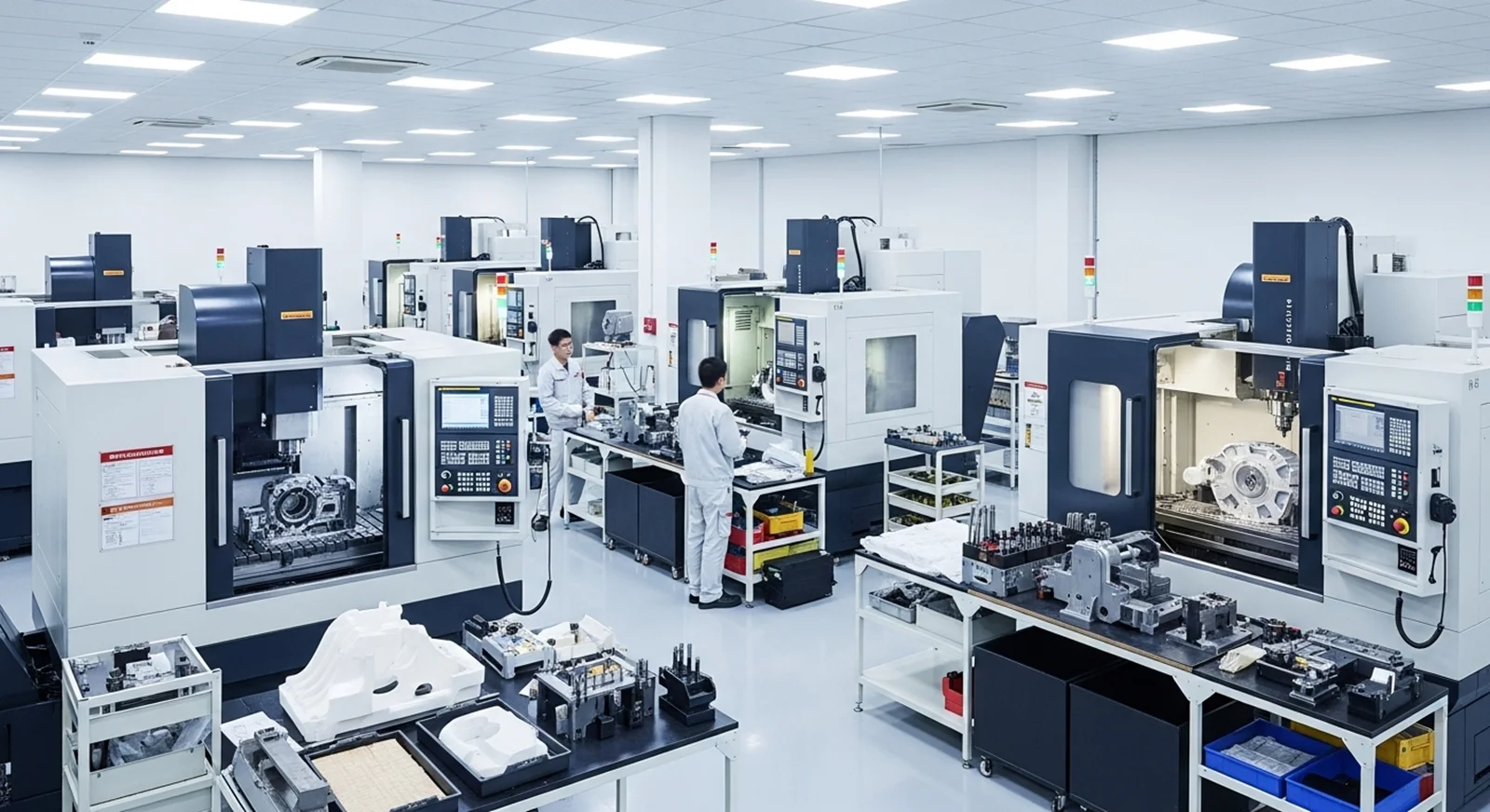
What Is Plastic Machining and Why Does Défense Rely on It?
When people ask what plastic machining is used for in defense the short answer is: almost everything that needs to be lightweight, durable, and precise. Precision plastic machining is the process of using CNC (Computer Numerical Control) equipment to cut, mill, turn, and shape engineering-grade plastics into highly accurate components. In the defense industry, where performance margins are razor-thin and failure is not an option, the ability to produce tight-tolerance plastic parts with repeatable accuracy is not a luxury it is a requirement. Defense engineers now specify high-performance polymer components for applications ranging from radar housings and electronics enclosures to structural brackets and bearing assemblies, because modern engineered thermoplastics deliver the combination of mechanical strength, chemical resistance, and low weight that metals simply cannot match at scale.
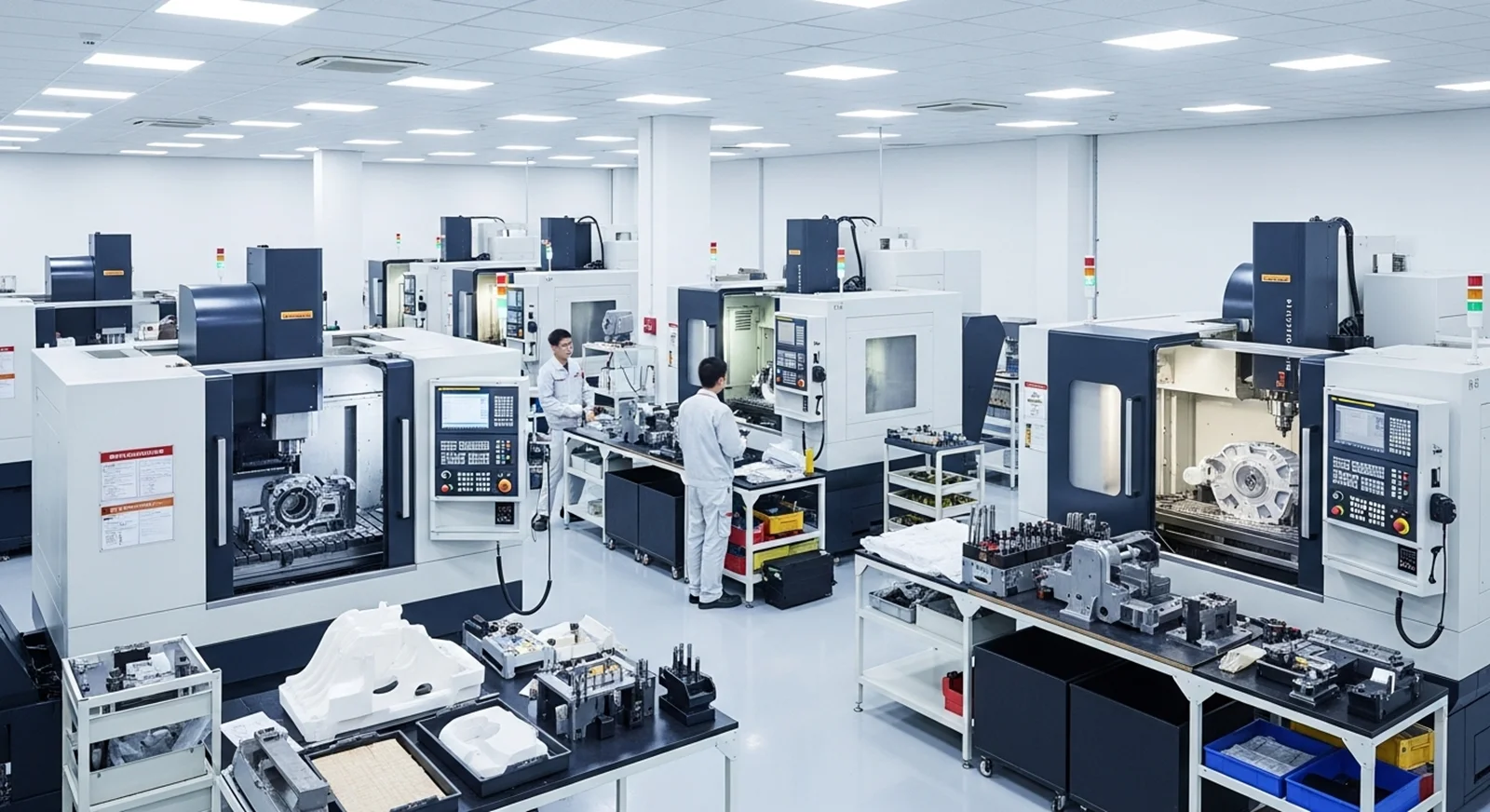
What Materials Are Used in Defense-Grade Plastic Machining?
The foundation of any high-performance plastic machining program is material selection. Not all plastics behave the same under machining conditions, and choosing the wrong polymer can result in dimensional drift, surface defects, or outright part failure in the field. For defense and aerospace applications, the most commonly specified materials include PEEK (Polyether Ether Ketone), which retains its mechanical properties at elevated temperatures and resists virtually all industrial chemicals; UHMW Polyethylene, valued for its self-lubricating surface and outstanding impact resistance; Delrin (Acetal), which machines cleanly to fine tolerances and is widely used in precision gears and structural inserts; PTFE (Teflon), chosen for electrical insulation and chemical barrier applications; and Nylon variants, which offer a practical balance of strength and ease of processing. Each of these materials requires specific tooling strategies, spindle speeds, and cooling approaches to achieve the dimensional tolerances that defense contracts demand. This is why working with an experienced custom plastic machining service provider matters so much material knowledge translates directly into part quality.
How Does CNC Plastic Machining Achieve the Tolerances Defense Applications Require?
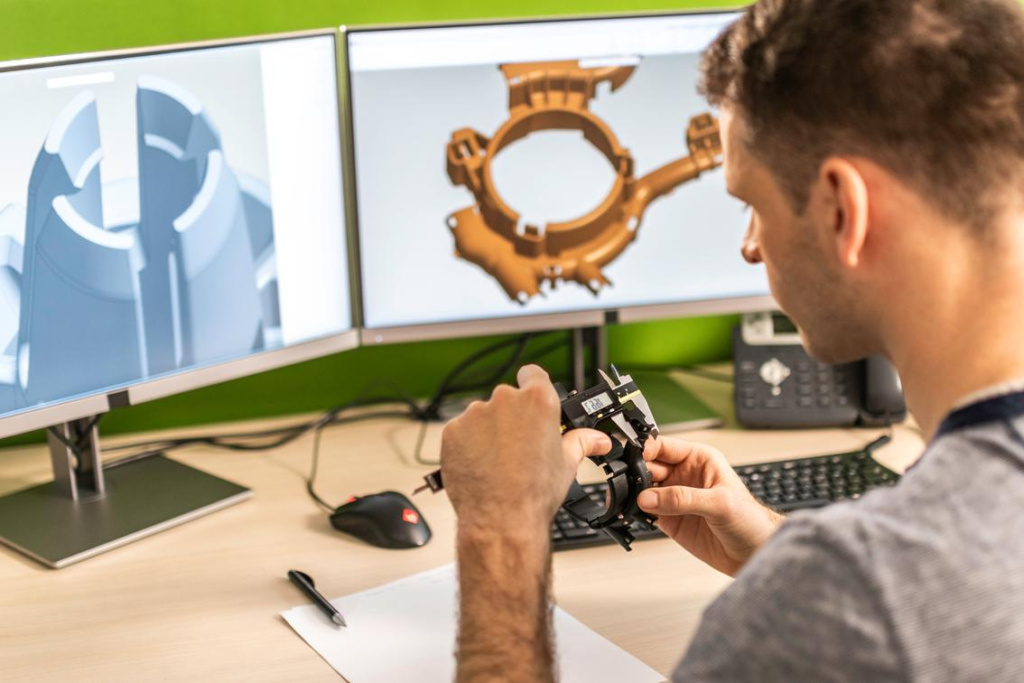
A common question from procurement engineers is: how tight can CNC plastic machining tolerances actually get? The answer, with the right setup, is ±0.001 inches or tighter on many polymers. Modern multi-axis CNC milling and CNC turning operations allow complex three-dimensional geometries to be produced in a single setup, reducing the cumulative error that comes from repositioning parts. CNC plastic milling is especially effective for producing flat faces, pockets, and slots with tight positional tolerances, while plastic turning operations excel at producing cylindrical features like bushings, spacers, and threaded inserts. Beyond the cutting process itself, plastic machining for defense also accounts for material annealing before machining to relieve internal stresses that would otherwise cause warping, and for careful post-machining inspection using CMM (Coordinate Measuring Machine) verification. The result is cleanroom-ready components that arrive at assembly exactly as specified, every time.
What Defense Applications Actually Use Precision Machined Plastic Components?
If you are wondering where plastic machined parts are used in defense equipment, the scope is broader than most people expect. Machined plastic components appear in radar and communications systems as lightweight antenna housings and radome structures that allow RF signals to pass without distortion while protecting sensitive electronics. In aerospace and defense avionics, custom plastic brackets and enclosures reduce aircraft weight without sacrificing structural integrity. Ground vehicle systems use precision-machined polymer bushings and bearing components to reduce maintenance cycles and improve corrosion resistance in harsh field environments. Naval and submarine applications specify PEEK and PTFE machined parts for their ability to operate reliably under high pressure and in saltwater exposure. Even in training equipment, simulation hardware, and portable field systems, lightweight plastic machined parts deliver performance advantages that metals cannot. The unifying thread across all of these is the need for complex part manufacturing that is precise, repeatable, and validated.
How Does the Process Move From Prototype to Full Production?
One of the most practical questions defense contractors ask is: how fast can plastic machined parts move from prototype to production? The answer depends heavily on the manufacturing partner’s capabilities. The most effective plastic machining service providers maintain integrated prototyping and production workflows under one roof, which means the design-validated prototype transitions to volume manufacturing without re-engineering the toolpath or re-qualifying materials. This is especially important in defense, where program schedules are fixed and late components carry serious consequences. Rapid plastic prototyping allows engineering teams to test fit, form, and function early before committing to tooling costs and the same CNC programming used for the prototype carries forward to production, compressing timelines significantly. Leading providers also offer plastic design engineering support from the beginning, ensuring that parts are designed for manufacturability and that material selection, compliance requirements, and tight-tolerance specifications are locked in before a single cut is made.
Why Is Cleanroom-Compatible Plastic Machining a Defense Requirement?
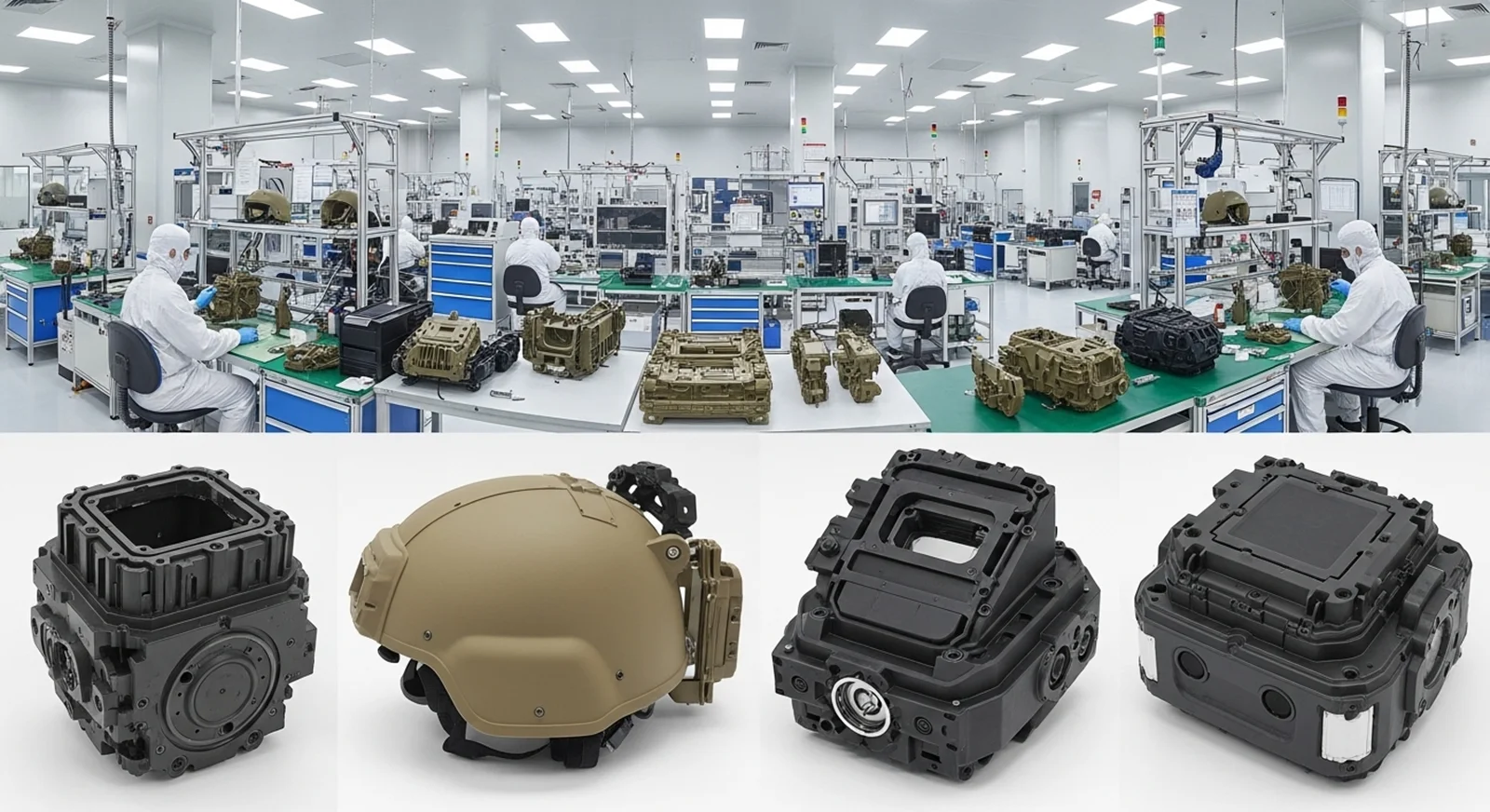
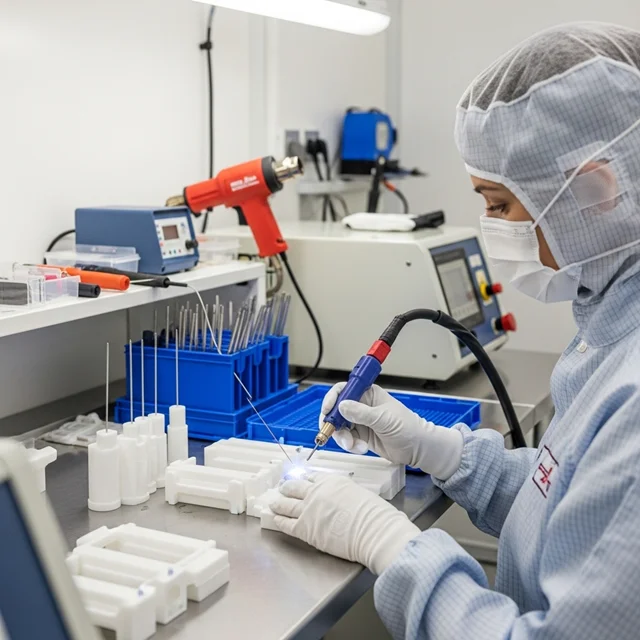
Defense and aerospace procurement teams frequently ask: why does plastic machining need to be cleanroom compatible? The answer is that many defense components particularly those involving optical systems, gyroscopes, inertial navigation units, and sensitive sensor assemblies require a contamination-free manufacturing environment. Even microscopic particles from the machining process can compromise the calibration or operation of precision instruments. Cleanroom-compatible CNC plastic machining takes place in controlled environments where particulate counts, humidity, and temperature are tightly managed. Combined with cleanroom assembly services, this ensures that high-performance polymer components arrive at system integration in a state that meets the cleanliness standards demanded by ISO-certified defense manufacturing. This level of process control is not available from general-purpose machine shops it requires a facility with dedicated cleanroom infrastructure and the quality management systems to sustain it.
How Plastic Machining Compares to Plastic Molding for Defense Components
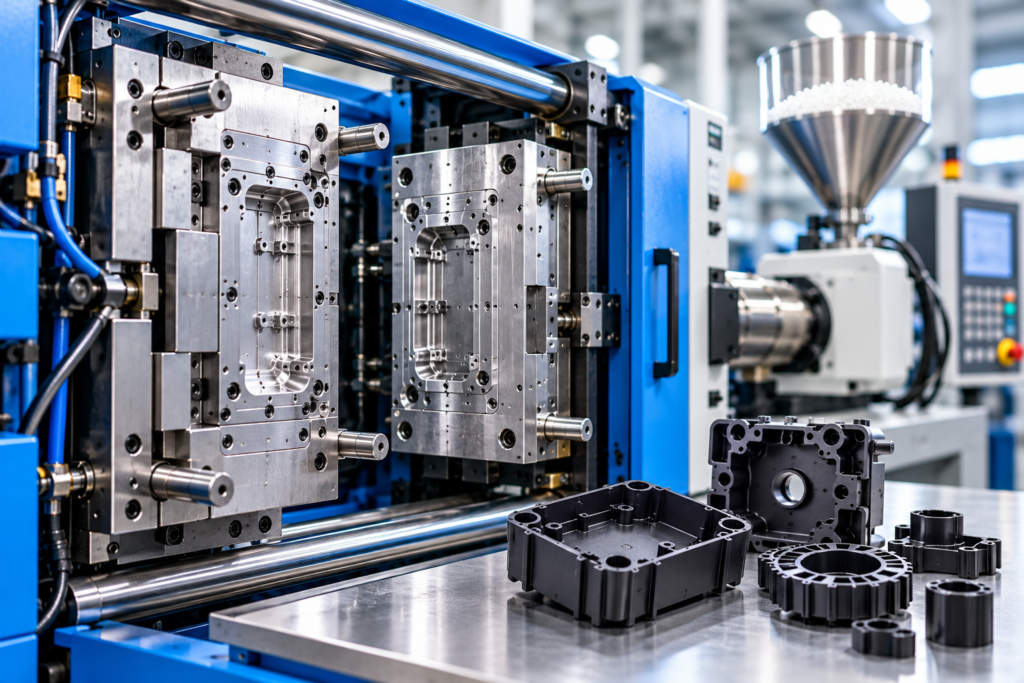
Defense engineers often ask: should I use plastic machining or plastic molding for my components? Both processes have their place, and the right answer depends on volume, geometry, and schedule. CNC plastic machining is faster to set up for low-to-mid volumes, requires no tooling investment, and is ideal for complex geometries and tight tolerances. Plastic molding becomes more economical at high volumes because the per-part cost drops sharply once tooling is amortized. For defense programs that start with prototype quantities and scale over time, machining bridges the gap delivering qualified parts immediately while molding tooling is developed. Some programs use both: machined components for structural and precision-fit applications, and molded components for higher-volume housings and covers. Plastic welding further extends design flexibility by enabling assemblies that cannot be produced as a single machined or molded piece. The key is having access to all of these capabilities through a single integrated plastic manufacturing partner.
Why Choose This Plastic Machining Service Provider
Foxx Technologies is an ISO 13485-certified precision plastic manufacturer operating Class 7 cleanrooms across seven facilities in four locations across the USA and India. With over 15 years of experience delivering tight-tolerance CNC plastic machined components to the defense, aerospace, industrial, electronics, and automotive sectors, the team brings end-to-end capabilities under one roof from plastic design and engineering through prototyping to full-scale cleanroom-compatible production. What makes this provider genuinely different is the combination of global manufacturing scale and mission-specific precision: every component is planned, validated, and produced to the exact compliance standard the application demands.
Frequently Asked Questions
|
Question |
Answer |
|---|---|
|
What types of plastics are used in precision CNC plastic machining for defense applications? |
High-performance polymers like PEEK, UHMW-PE, Delrin, PTFE, and Nylon are most commonly used. These materials offer excellent chemical resistance, dimensional stability, and mechanical strength needed for mission-critical defense components. |
|
How accurate is CNC plastic machining for tight-tolerance defense components? |
Modern CNC plastic machining achieves tolerances as tight as ±0.001 inches. Multi-axis CNC milling and turning operations allow complex geometries to be produced repeatedly with high dimensional accuracy across full production runs. |
|
Can plastic machined parts replace metal components in defense equipment? |
Yes, in many applications. Engineered thermoplastics offer comparable strength at significantly lower weight and improved corrosion resistance. Custom plastic components are now widely used in defense electronics enclosures, structural brackets, and sensor housings. |
|
What is the lead time for custom plastic machined components from prototype to full production? |
Lead times depend on part complexity and volume. Rapid prototyping typically takes days, while scaling to full production generally takes two to eight weeks. Streamlined design-to-production workflows help minimize delays significantly. |
|
Why is cleanroom-compatible plastic machining important for defense and aerospace applications? |
Many defense and aerospace components require contamination-free environments during manufacturing. Cleanroom-compatible plastic machining ensures parts meet strict cleanliness standards, preventing particle contamination that could compromise sensitive electronic, optical, or mechanical systems. |
Found this site through a friend and I am glad I did. The rewards system is very motivating. Give phjilibbcom a try!
Really enjoying the current promotions. The gameplay is fluid and the wins feel rewarding. Jump into pkq98 and see for yourself.
phxojili is surprisingly easy to navigate. I didn’t have any trouble setting up my account or finding my favorite games. Very smooth operation overall.
Found this place through a friend and it did not disappoint. The bonuses are actually fair and easy to claim on bdok999.
Just downloaded the app and the interface is super smooth. Really enjoying the experience so far. Check out 118betapk for a great time!
Very user friendly layout and the promotions are actually worth it. I feel lucky whenever I log in here. Check out luky97login
Really enjoying the slots here. The graphics are great and I’ve had a couple of decent wins today. Visit phjili95
Very reliable platform with a great selection of slots. I had a huge win yesterday on gg189login and the withdrawal was instant.
I appreciate the transparency and the clear terms of service. No hidden catches here. I feel safe betting on krcasinokrwin.
Finally found a site that actually treats players right. The bonuses at xjilicom are legit and easy to claim.