Why Plastic Welding Has Become a Core Manufacturing Process
The shift toward advanced plastic welding technology in high-performance industries did not happen overnight. Engineers and production managers spent years realizing that traditional joining methods mechanical fasteners, adhesives, solvents simply could not keep up with the tighter tolerances, lighter weight requirements, and stricter safety standards that both aerospace and automotive manufacturing now demand. Plastic welding closes that gap. It creates permanent, particle-free, high-strength seals without adding hardware weight, without chemical contamination, and without introducing points of mechanical failure. That combination is hard to beat, which is why adoption has accelerated across both industries over the past decade.
What Plastic Welding Technology Actually Does
At its core, thermoplastic welding works by applying controlled energy heat, vibration, laser, or ultrasonic frequency to the interface between two compatible plastic components. The material at that interface softens, the two surfaces fuse, and once cooled the joint is structurally continuous. There is no filler material, no adhesive layer, and no fastener. The permanent plastic bond formed this way is typically as strong as or stronger than the base material itself. Crucially, the weld is also leak-proof, which matters enormously when the component is a fluid line, a fuel system part, or an enclosure protecting sensitive electronics. The main welding methods used in precision manufacturing today are ultrasonic welding, laser welding, hot plate welding, hot gas welding, extrusion welding, and speed tip welding each suited to different part geometries, material types, and production volumes.
Plastic Welding in Aerospace: Precision Under Extreme Conditions
The aerospace welding solutions space is uniquely demanding. Every component that goes into an aircraft or aerospace system has to meet strict aviation-grade specifications. Weight is not just a performance consideration it is a safety and fuel efficiency variable. That is why the push toward lightweight thermoplastic components in place of metal has been so significant in aerospace, and why the quality of the plastic joining method matters so much. A joint that fails in an aircraft fuel line, duct system, or cockpit window assembly is not just a manufacturing defect. It is a safety event.
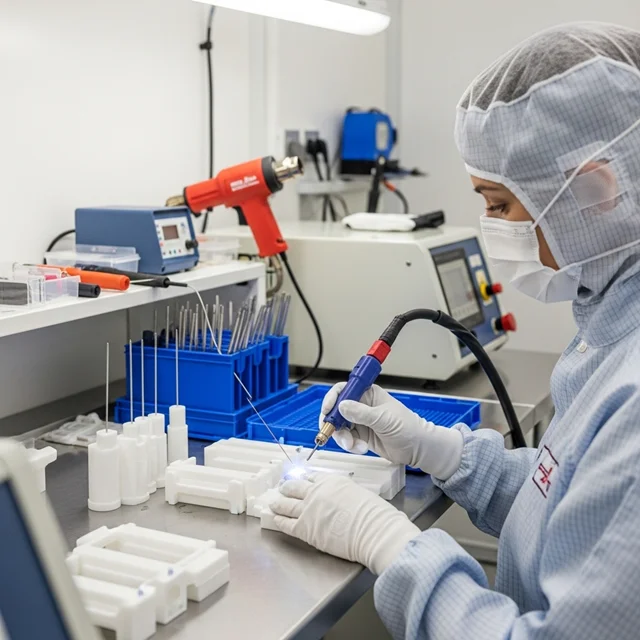
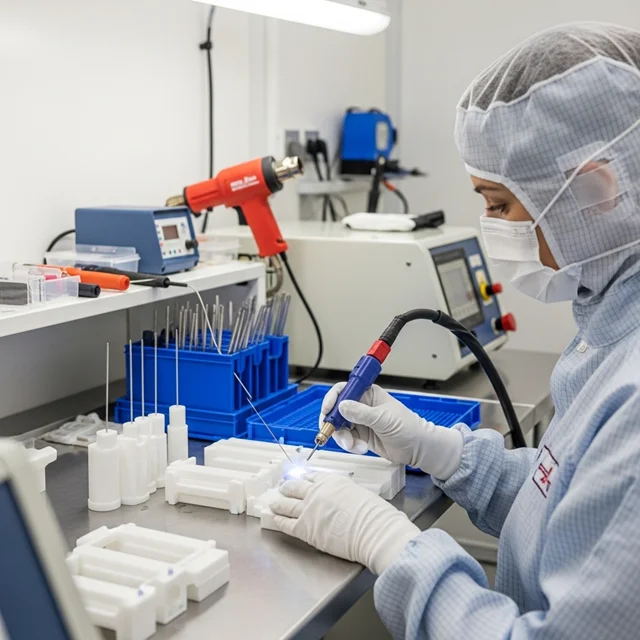
Ultrasonic plastic welding is widely used in aerospace for smaller, intricate assemblies where a clean, high-strength bond is needed without any heat affected zone distortion. Laser welding for plastics is particularly valued in applications requiring minimal thermal distortion and tight dimensional tolerances characteristics that are non-negotiable in high-clearance aerospace assemblies. Hot gas welding is another proven method for aerospace use, especially where the component has complex geometry or requires a strong, hand-controlled weld along a curved joint line. What all of these aerospace welding solutions share is a requirement for rigorous validation: weld integrity across aerospace-grade specifications, strength and durability testing under extreme thermal and pressure conditions, and cleanroom-compatible production environments where contamination cannot be tolerated.
Plastic Welding in Automotive: Speed, Scale, and Structural Performance
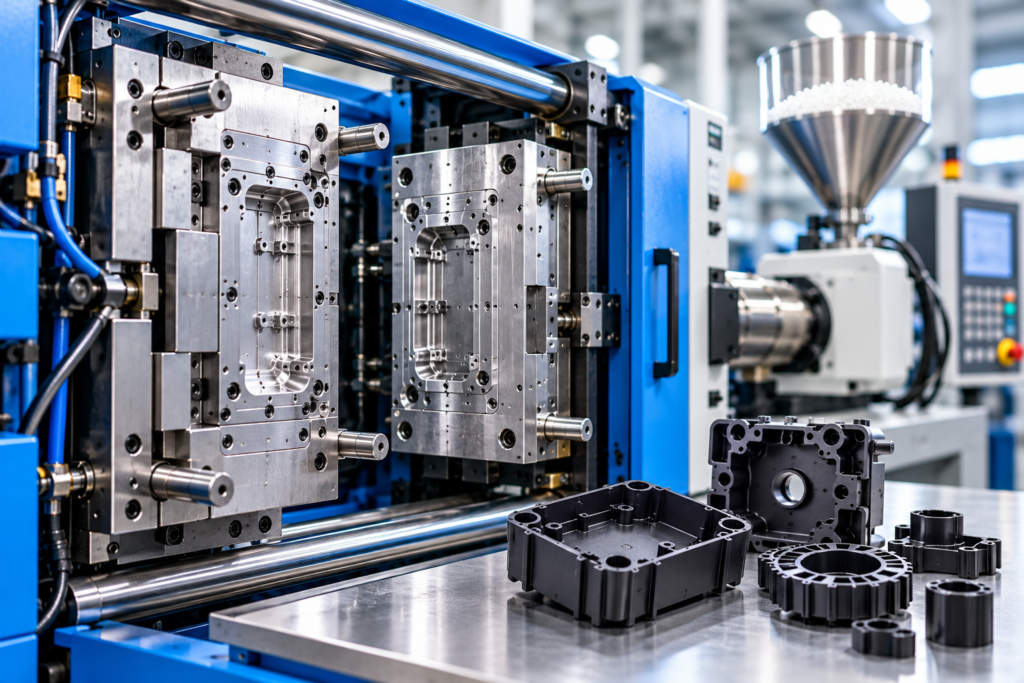
The requirements shift meaningfully when you move from aerospace to automotive plastic joining. The automotive industry operates at much higher production volumes, which means welding processes have to be not just precise but fast and repeatable. Automotive manufacturers rely on plastic welding technology for fuel tanks, bumpers, dashboard components, door panels, fluid reservoirs, and a growing array of under-hood components as vehicles trend toward lighter, more fuel-efficient designs. Here, the emphasis is on high-volume plastic welding consistency every joint across thousands of parts per day has to meet the same dimensional and structural standard.
Hot plate welding and vibration welding are popular in automotive contexts because they scale well and handle larger, thicker-walled components that do not suit ultrasonic or laser approaches. Ultrasonic welding remains important for smaller interior and electronic housing parts. The key distinction from aerospace is that automotive tolerates a broader range of joint geometry and material thickness, but the speed and cycle time requirements are far tighter. Automotive plastic joining solutions also have to contend with temperature cycling parts that heat up near the engine, cool overnight, and cycle through thousands of expansions and contractions across a vehicle’s service life. That makes weld strength and seal integrity testing as important in automotive as it is in aerospace, just measured against different operational conditions.
The Key Technical Differences Between Aerospace and Automotive Welding Requirements
Understanding how these two industries diverge helps explain why plastic welding technology cannot be treated as a single, generic process. In aerospace, compliance and traceability are the priority every weld has to be documented, validated to specific aerospace standards, and often produced in a cleanroom to prevent contamination. Cleanroom-compatible welding, rated to ISO Class 7 environments, is a baseline expectation in critical aerospace assembly. In automotive, the priority is consistent quality at scale precision fixturing, automated weld cycles, and rapid seal integrity validation so that production lines do not slow down. Material selection also differs: aerospace favors high-performance fluoropolymers like PTFE and PVDF, as well as specialty resins with flame retardancy and thermal stability built in. Automotive applications more commonly use polypropylene, ABS, and polyethylene materials chosen for cost-effective performance at volume. The right welding method, the right process validation protocol, and the right material knowledge all have to align for each industry’s needs.
Why a Specialist Provider Makes a Real Difference
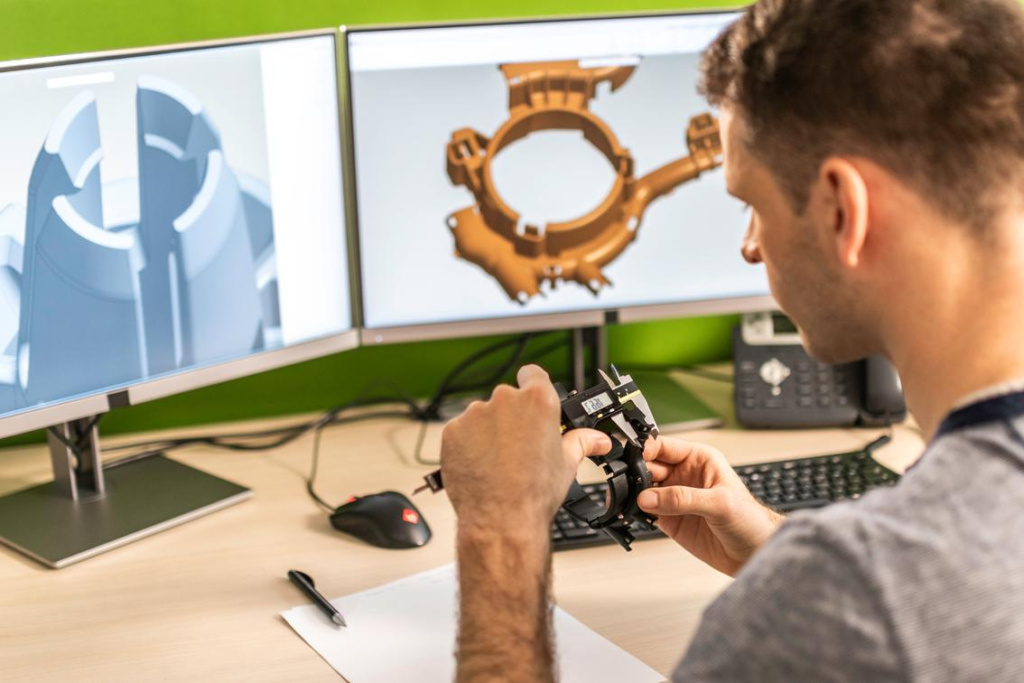
For engineering teams sourcing plastic welding services across aerospace or automotive programs, the provider’s depth of process expertise is what separates good outcomes from costly rework. Advanced capabilities including precision fixturing and assembly integration, strength and leak seal integrity testing, and filtration systems welding need to exist under one roof to avoid the coordination overhead of working with multiple vendors. Providers with end-to-end capability, from plastic design through prototyping, machining, molding, and cleanroom assembly, can catch design-for-weldability issues before production rather than after.
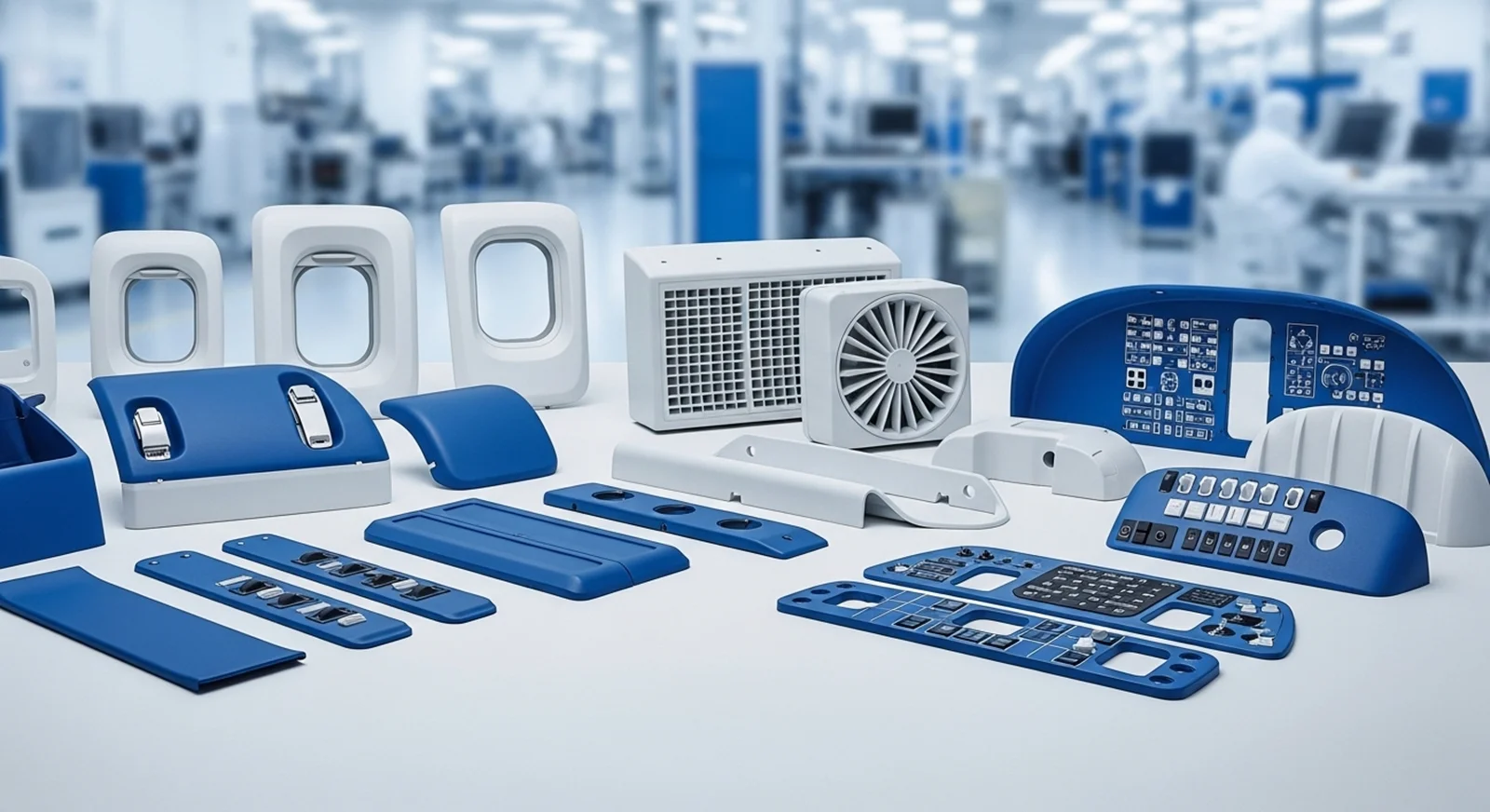
What Makes This Provider Stand Out
Foxxtechnologies brings over 15 years of ISO 13485-certified manufacturing experience with Class 7 cleanroom facilities across four locations in the USA and India. Their plastic welding services span ultrasonic, laser, hot plate, hot gas, and extrusion welding all validated for aerospace and automotive requirements. Backed by in-house design, prototyping, and full weld integrity testing, they deliver end-to-end precision plastic solutions built for mission-critical performance.
Frequently Asked Questions
Q1: What is the difference between ultrasonic welding and laser welding for plastics?
Ultrasonic welding uses high-frequency vibration to generate localized heat at the joint interface, making it ideal for small, complex assemblies requiring fast cycle times. Laser welding uses a focused beam with no contact, making it better suited for applications where minimal thermal distortion and tight tolerances are critical, such as in precision aerospace components.
Q2: Which plastic welding method works best for automotive fuel tanks?
Hot plate welding and vibration welding are the most common choices for automotive fuel tanks because they handle large, thick-walled components effectively and produce strong, leak-proof seals that hold up under fuel exposure, pressure cycling, and temperature variation across the vehicle’s service life.
Q3: Why is cleanroom-compatible welding important in aerospace manufacturing?
Aerospace components often operate in environments where even microscopic contamination can compromise performance or safety. Cleanroom-compatible welding, performed in ISO Class 7 validated environments, ensures that no particulates, oils, or contaminants are introduced during the welding process a baseline compliance requirement for many aerospace sub-assemblies.
Q4: What thermoplastic materials are most commonly used in aerospace plastic welding?
Aerospace applications frequently call for PTFE (polytetrafluoroethylene), PVDF (polyvinylidene fluoride), CPVC (chlorinated polyvinyl chloride), and high-performance specialty resins selected for their combination of thermal stability, chemical resistance, flame retardancy, and structural integrity under aviation-grade stress conditions.
Q5: How do manufacturers validate weld quality in high-stakes aerospace and automotive applications?
Weld validation typically includes pressure and leak testing to confirm seal integrity, tensile and shear strength testing to verify the joint meets structural specifications, and visual or non-destructive inspection to identify surface or subsurface defects. For aerospace, this testing is documented against specific regulatory standards, while automotive validation is calibrated to OEM quality specifications and production volume consistency requirements.