
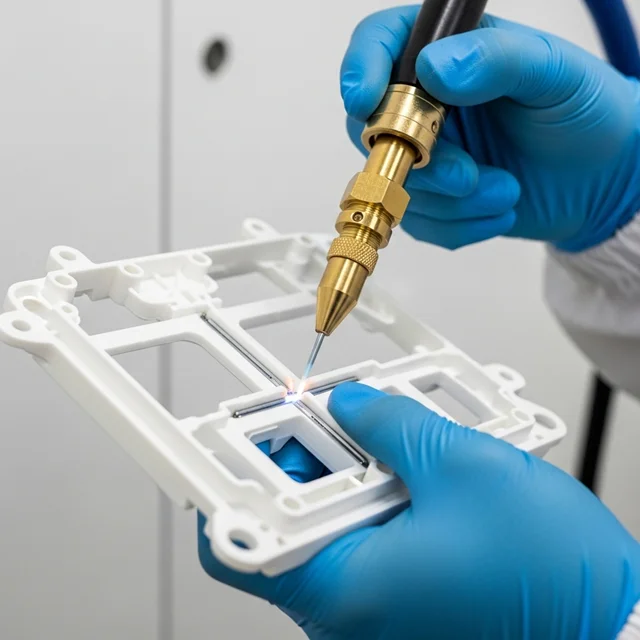
Electronic devices keep getting smaller, more complex, and more sensitive to their surroundings. Circuit boards, sensors, and connectors all need housings that keep out dust, moisture, and static without adding bulk or weight. This is where plastic welding steps in as a preferred joining method for manufacturers who cannot afford loose seams or weak seals in a finished product.
What Is Plastic Welding?
Plastic welding is a manufacturing process that joins two or more thermoplastic components by heating their surfaces until they soften, then pressing them together so the material fuses into one continuous piece. Unlike adhesives or mechanical fasteners, the joint becomes part of the base material itself, so there is nothing to loosen, corrode, or peel away over time. For electronics, that translates into enclosures and housings that hold their shape and their seal through years of handling and use.
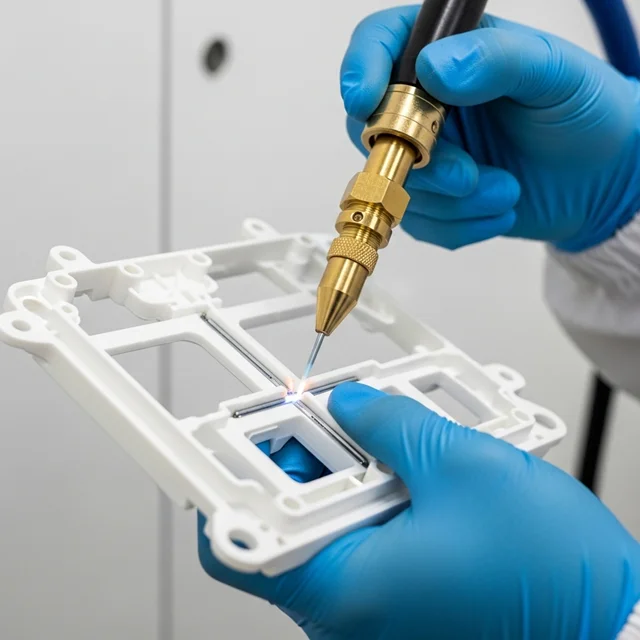
Why Electronics Manufacturers Rely on Plastic Welding
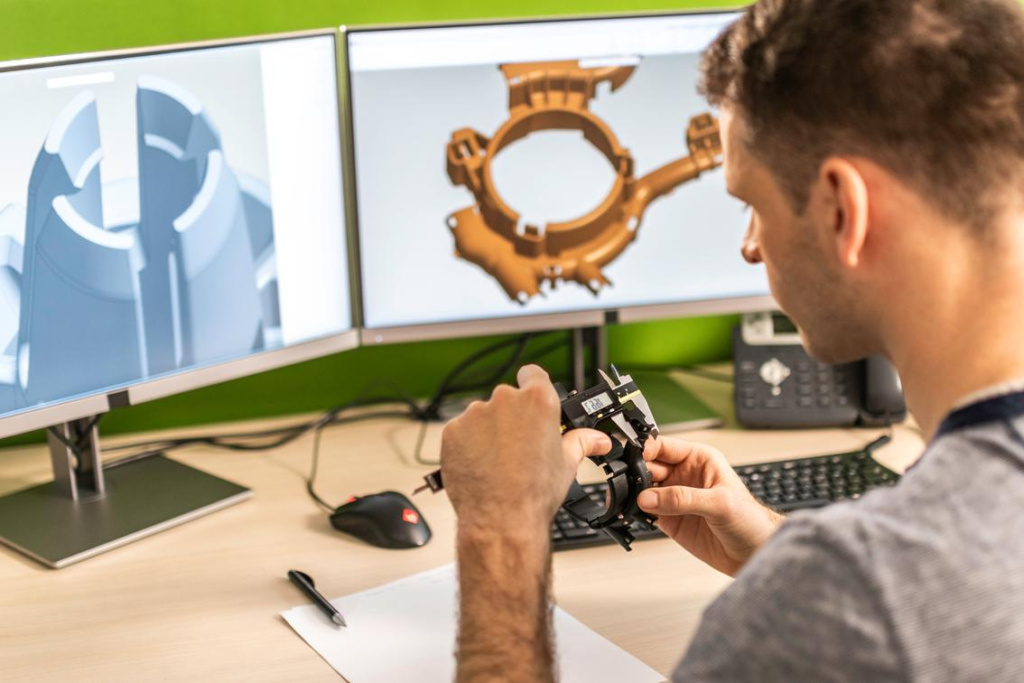
In the electronics industry, plastic welding services are used to build protective enclosures, circuit board holders, connector housings, and sensor casings that shield delicate internal components from the outside world. A device that spends its life outdoors, on a factory floor, or inside a vehicle dashboard needs a housing that resists vibration, temperature swings, and exposure to dust or liquid. Because welded joints don’t depend on glue lines or screws, they tend to hold up better under these conditions while keeping the overall assembly lighter and more compact—a real advantage when board space and weight budgets are already tight.
Plastic Welding Processes Used in Electronics
Not every plastic part calls for the same joining technique, so manufacturers draw on a handful of proven methods depending on part geometry, wall thickness, and production volume:
-
Ultrasonic welding uses high-frequency vibration to generate localized heat, ideal for small, intricate electronic housings that need a clean, fast bond.
-
Hot plate and infrared welding apply even heat across larger or thicker-walled components before pressing them together, useful for bigger enclosures.
-
Laser welding is a non-contact method suited to tight-tolerance assemblies where minimal thermal distortion matters, such as sensor modules.
-
Hot gas and extrusion welding work well for repairs, larger seams, and components that need added filler material along the joint.
-
Speed tip welding handles narrow, hard-to-reach joints where standard tooling can’t easily fit.
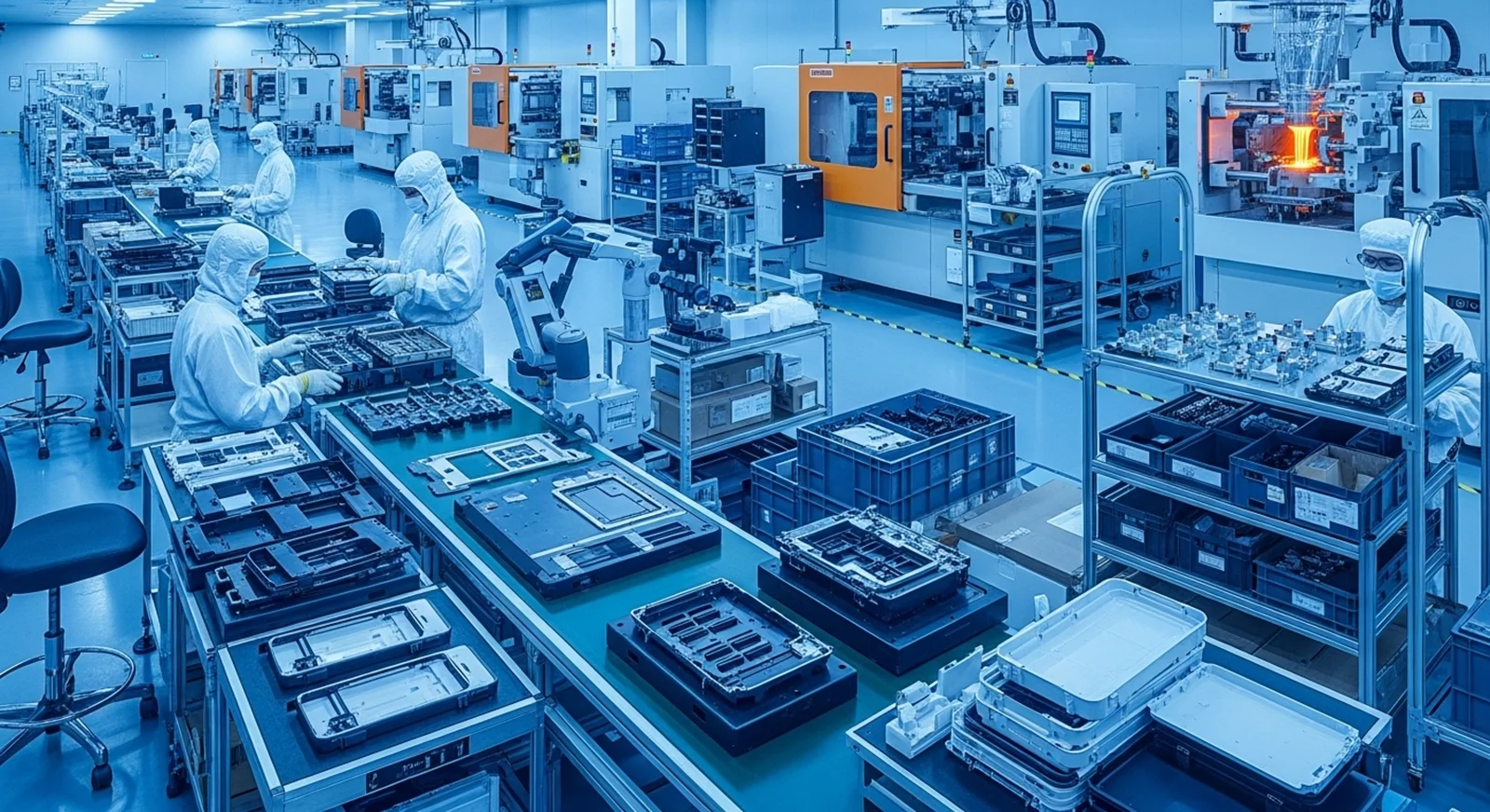
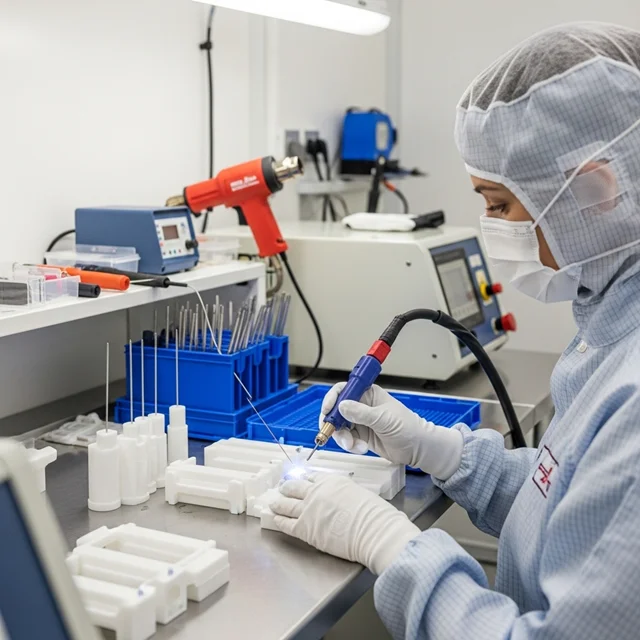
Each method can be paired with a cleanroom-compatible setup when a part will be integrated into a contamination-sensitive electronic assembly.
Benefits of Plastic Welding for Electronics
Manufacturers turn to plastic welding for several practical reasons. The bond is permanent, so there is no risk of adhesive breakdown or fastener loosening over years of service. The process skips extra consumables such as screws, solvents, or glue, which keeps material costs and assembly complications down. Welded joints also work on almost any part shape, including curved or irregular housings that would be difficult to fasten mechanically. And because most techniques don’t produce fumes, they fit comfortably into controlled production environments, including cleanrooms built for sensitive electronic assembly work.
Choosing the Right Plastic Welding Services Partner
Not every provider is equipped to handle electronics-grade tolerances. Look for a manufacturer with in-house plastic design and engineering support, cleanroom-compatible assembly, and testing protocols that check for strength, leak resistance, and seal integrity before parts ship. A partner who can move from rapid prototyping to volume production under one roof also saves time and removes the coordination headaches that come with juggling multiple vendors.
Why Foxx Technologies Is Special
Foxxtechnologies pairs advanced plastic welding with cleanroom-compatible assembly, in-house design, and ISO 13485-certified quality systems across USA and India facilities, giving electronics manufacturers one dependable partner from prototype through full-scale production.
Explore Foxxtechnologies’ full plastic welding capabilities or see how these services support electronics manufacturing from design through cleanroom assembly.
Frequently Asked Questions
-
What materials are commonly used in plastic welding for electronics?
Common choices include polypropylene, PVC, CPVC, PVDF, and PTFE, each selected for chemical resistance, temperature tolerance, or rigidity depending on the housing’s intended use.
-
Is plastic welding stronger than adhesive bonding?
Generally, yes. Welded joints fuse the base material itself into one piece, creating a permanent bond that resists peeling, loosening, or chemical breakdown better than most adhesives.
-
Can plastic welding be done in a cleanroom environment?
Yes. Cleanroom-compatible welding methods are available for contamination-sensitive electronic assemblies, meeting Class 7 and Class 8 standards used in precision manufacturing.
-
How do I choose the right welding process for my part?
It depends on part size, wall thickness, geometry, and production volume; an experienced provider can recommend ultrasonic, laser, hot plate, or another method after reviewing your design.
-
Does plastic welding work for small production runs?
Yes. Many plastic welding services scale from low-volume prototypes to high-volume manufacturing, making the process practical for early development and mass production alike.
Related reading: Plastic Welding Services | Electronics Industry Solutions | Plastic Molding | Contact Foxxtechnologies
Found this site through a friend and I am glad I did. The rewards system is very motivating. Give phjilibbcom a try!
Really enjoying the current promotions. The gameplay is fluid and the wins feel rewarding. Jump into pkq98 and see for yourself.
phxojili is surprisingly easy to navigate. I didn’t have any trouble setting up my account or finding my favorite games. Very smooth operation overall.
Found this place through a friend and it did not disappoint. The bonuses are actually fair and easy to claim on bdok999.
Just downloaded the app and the interface is super smooth. Really enjoying the experience so far. Check out 118betapk for a great time!
Very user friendly layout and the promotions are actually worth it. I feel lucky whenever I log in here. Check out luky97login
Really enjoying the slots here. The graphics are great and I’ve had a couple of decent wins today. Visit phjili95
Very reliable platform with a great selection of slots. I had a huge win yesterday on gg189login and the withdrawal was instant.
I appreciate the transparency and the clear terms of service. No hidden catches here. I feel safe betting on krcasinokrwin.
Finally found a site that actually treats players right. The bonuses at xjilicom are legit and easy to claim.