
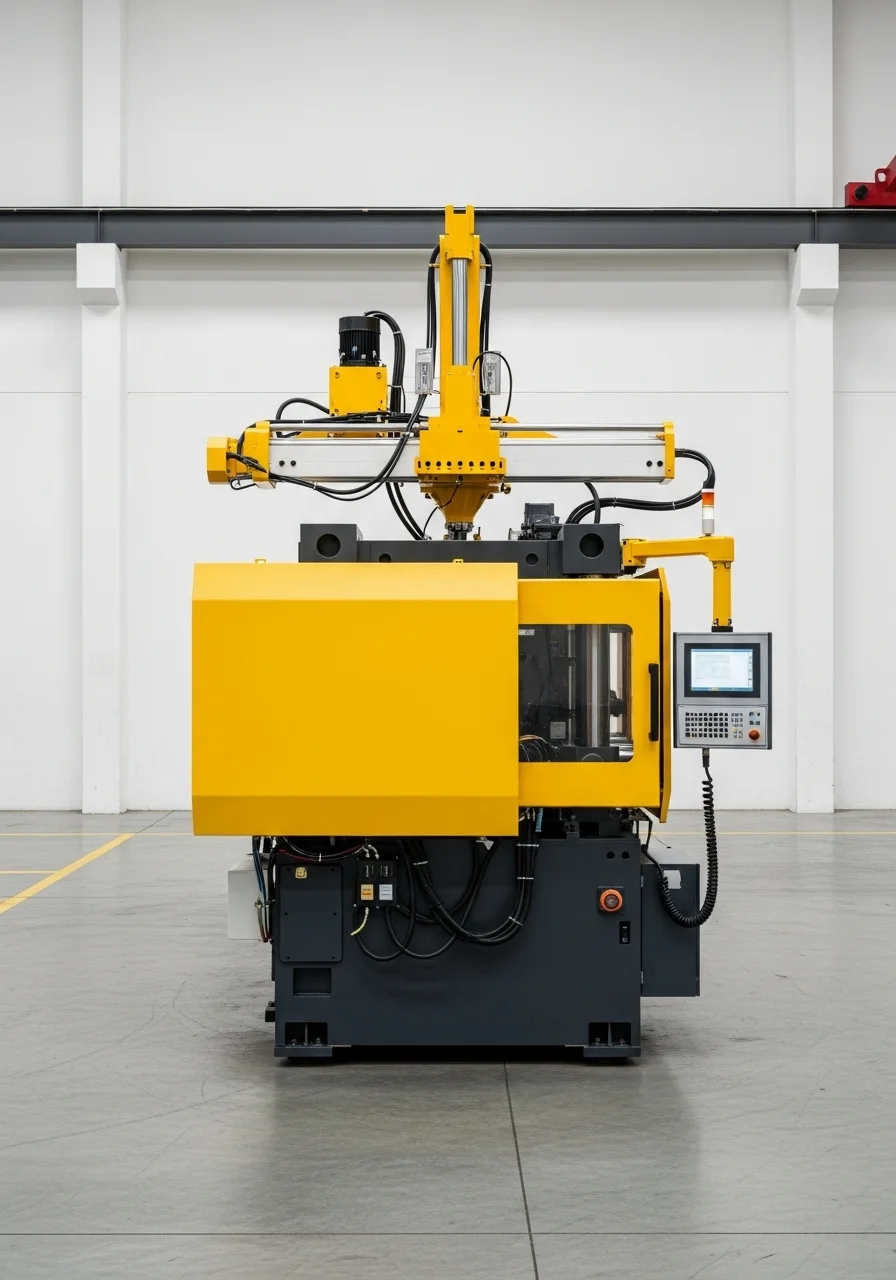
Retail moves fast. Consumer preferences shift overnight, seasonal windows are tight, and the cost of launching the wrong product is steep. For brands that manufacture physical goods from packaging components to display fixtures and product housings speed to market is not a luxury, it is a survival requirement. That is exactly where Prototyping steps in as one of the most overlooked competitive advantages in retail product development.
Most retail manufacturers understand what Prototyping is in theory. But few truly leverage it as a structured, end-to-end strategy that links Plastic Designing, Plastic Molding, Plastic Machining, Plastic Welding, and Cleanroom Assembly into a single, accelerated launch pipeline. This article breaks down how that works and why it matters to your brand’s bottom line.
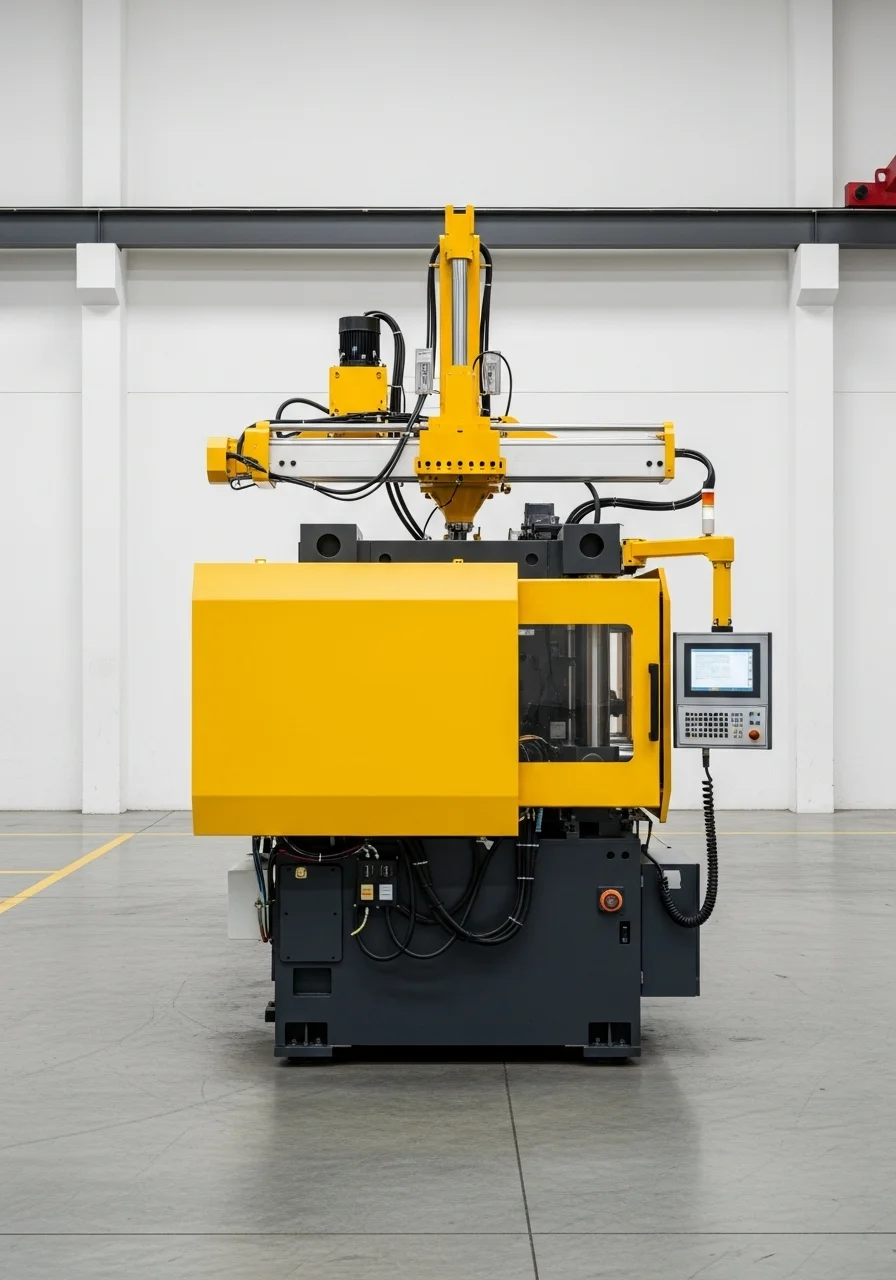
Why Retail Product Development Keeps Stalling and How Prototyping Fixes It
The most common reason retail product launches fall behind schedule is late-stage design failure. A brand finalizes a concept, commits to tooling, runs a full production batch and then discovers a dimensional flaw, a material mismatch, or an assembly error that could have been caught weeks earlier. By that point, the rework is expensive and the launch window is gone.
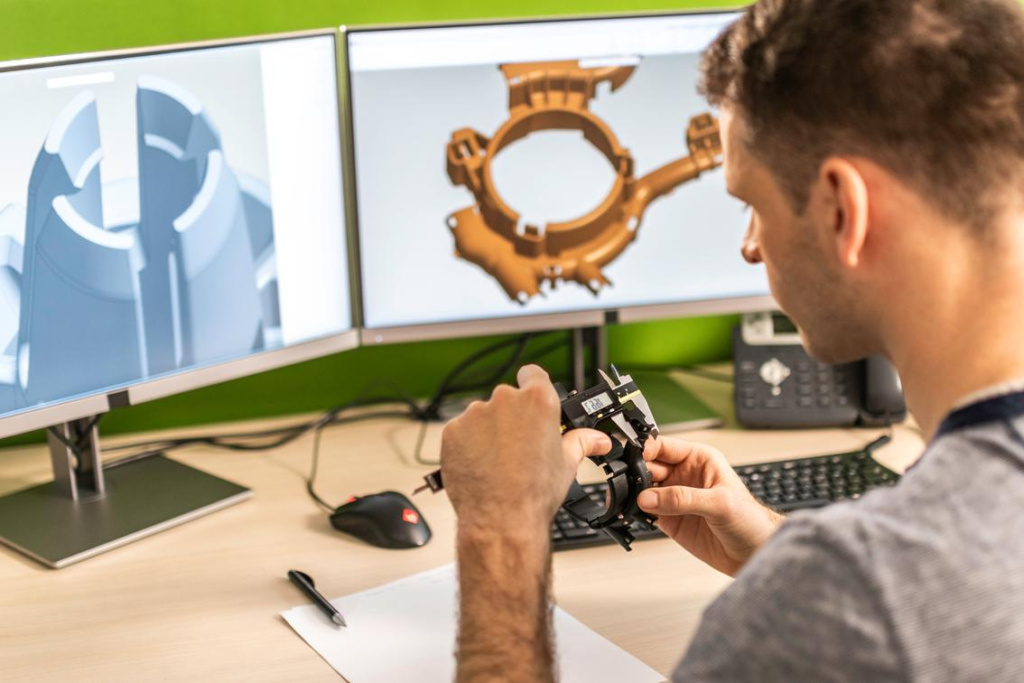
Structured Prototyping prevents this by creating a physical validation checkpoint before any large-scale production commitment is made. Using Plastic Designing tools like CAD modeling, engineers can translate a digital concept into a tangible object and test it under real-world conditions checking mechanical fit, material behavior, surface finish, and assembly compatibility all at once. The earlier a flaw is found, the cheaper it is to fix. That principle alone can save retail brands tens of thousands of dollars per product cycle.
Plastic Designing Is Where Speed Actually Begins
Many retail brands treat design as a pre-production formality something that happens before the “real work” starts. That mindset is exactly what slows launches down. In reality, Plastic Designing is the most leverage-rich phase of the entire process. Decisions made here about wall thickness, gate placement, parting lines, draft angles directly determine how fast and how accurately a prototype can be produced.
CAD-based Plastic Designing allows engineers to simulate stress, model material behavior, and anticipate tooling challenges before a single gram of resin is melted. When paired with Prototyping, it creates a tight feedback loop: design, build, test, refine often completing multiple iterations in the time it would have previously taken to complete just one. For retail brands launching multiple SKUs per season, this compresses development timelines significantly.
From Prototype to Production: The Role of Plastic Molding
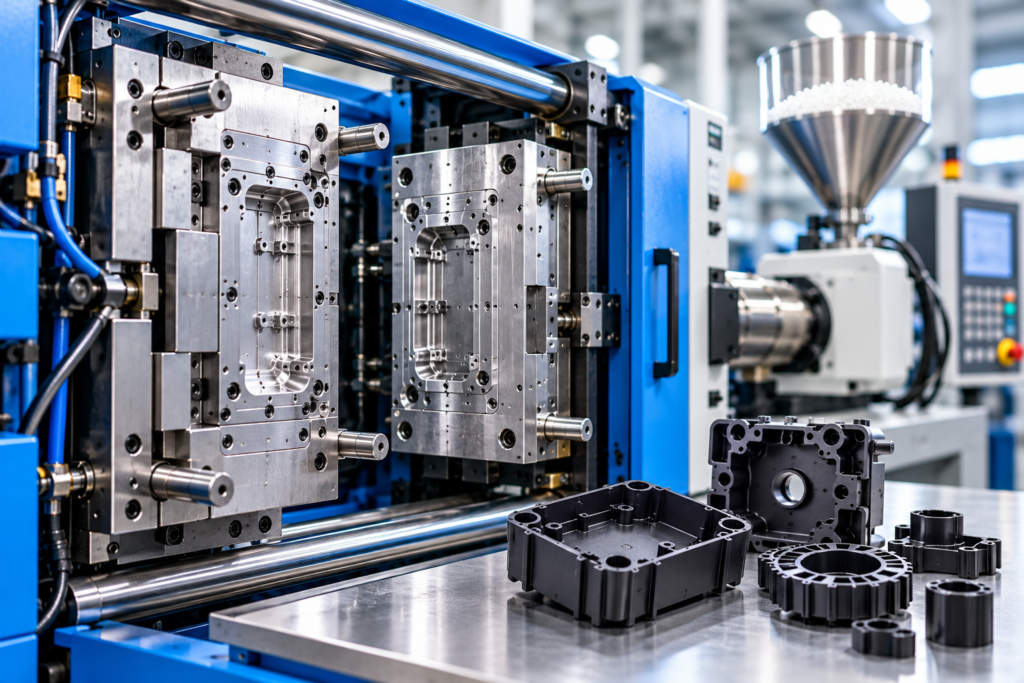
Once a prototype clears design validation, the next critical transition is into Plastic Molding. This is where a prototype stops being a proof-of-concept and starts becoming a production-ready component. There are several molding paths available injection molding, blow molding, and extrusion molding and the choice depends on the geometry, volume requirements, and material specifications of the retail product in question.
What many retail teams do not realize is that Prototyping and Plastic Molding are not sequential activities they are parallel ones. Soft tooling and bridge molding techniques allow low-volume prototype runs to be produced using methods that closely mirror full-scale injection molding, which means the transition to high-volume production is faster, more predictable, and less prone to quality surprises. Brands that treat these as two separate departments rather than an integrated workflow consistently lose time at the handoff stage.
Precision Plastic Machining: Getting the Tolerances Right Before Tooling
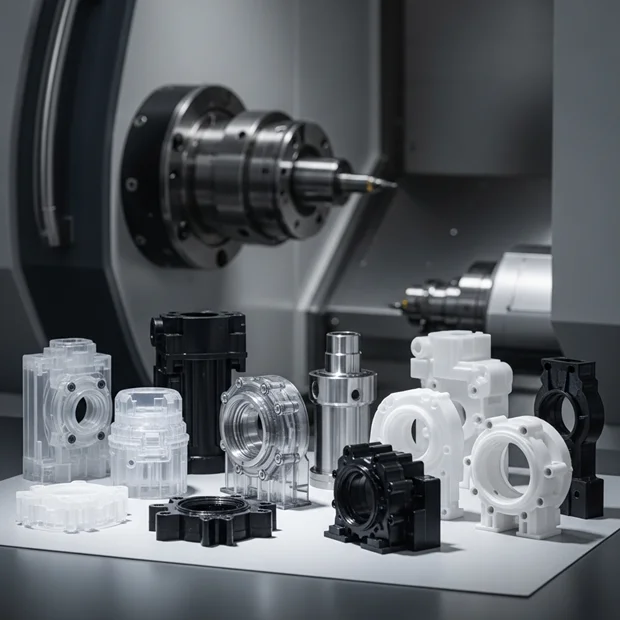
Not every retail component can be efficiently validated through additive manufacturing alone. Complex geometries, tight-tolerance features, and functional assemblies often require Plastic Machining CNC-based subtractive processes that deliver production-grade accuracy at prototype quantities. Plastic Machining is particularly valuable for retail display systems, housing components, and structural fixtures where dimensional accuracy is non-negotiable.
Using Plastic Machining during the prototype phase means your engineering team can validate form, fit, and function with parts that behave exactly like production components without committing to permanent tooling. This is especially important when a retail product involves mating parts, mechanical interfaces, or snap-fit assemblies where even a 0.2mm tolerance deviation can cause assembly failure at scale.
Plastic Welding: Building Structural Integrity Into Every Prototype
Retail products that require sealed housings, joined panels, or multi-part assemblies need more than just accurately molded individual components they need robust joining. Plastic Welding techniques such as ultrasonic welding, vibration welding, and hot plate welding create permanent, high-strength bonds between plastic components without the need for adhesives, fasteners, or solvents.
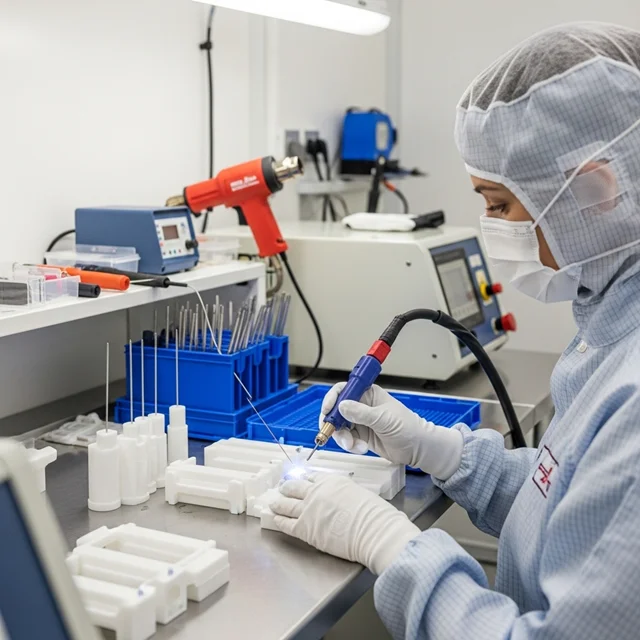
Incorporating Plastic Welding into the prototyping phase allows retail brands to validate the structural performance of joined assemblies before they enter full production. It also confirms that the chosen welding technique is compatible with the selected resin, wall thickness, and joint geometry preventing costly production failures that only reveal themselves under operational stress. For products like retail POS enclosures, packaging units, and display fixtures, this validation step is not optional it is essential.
Cleanroom Assembly: When Retail Product Standards Demand Contamination Control
Not all retail products are created in standard manufacturing environments. Products that incorporate sensitive electronics, optical components, or materials requiring contamination-free handling need to be assembled in controlled environments and that is where Cleanroom Assembly becomes a critical part of the prototyping and production workflow.
Class 7 Cleanroom Assembly environments control particulate contamination, temperature, humidity, and static ensuring that retail products meet both performance and compliance standards from the very first prototype batch. For retail brands operating in categories like electronics packaging, medical retail, or precision consumer devices, Cleanroom Assembly during the prototype phase ensures that the quality standards established at prototype scale are fully replicable at production volume. It eliminates a common failure point where products pass prototype testing but fail contamination audits during production.
Why Foxx Technologies Is the Right Partner for Retail Prototyping
Foxx Technologies is a precision plastic manufacturing company with over 15 years of experience serving the retail, aerospace, automotive, defense, electronics, and industrial sectors. Operating across five manufacturing facilities with six Class 7 Cleanroom environments and ISO 13485 certification, Foxx Technologies delivers end-to-end capabilities from Plastic Designing and Prototyping through Plastic Molding, Plastic Machining, Plastic Welding, and Cleanroom Assembly all under one roof. For retail brands that need a single, accountable manufacturing partner from concept to launch, Foxx Technologies provides the infrastructure, expertise, and responsiveness to make that possible.
Frequently Asked Questions
-
What is the difference between Prototyping and full-scale Plastic Molding?
Prototyping validates design intent at low volume before tooling investment, while Plastic Molding produces components at production scale. Prototyping identifies design flaws, material incompatibilities, and assembly issues early reducing rework costs and accelerating time-to-market significantly.
2.How does Plastic Machining support the retail product prototyping process?
Plastic Machining uses CNC processes to produce prototype parts with production-level tolerances. It is particularly useful for tight-fit assemblies and complex geometries where additive manufacturing cannot match the dimensional accuracy required for functional retail product validation.
3.When should Plastic Welding be included in a retail product prototype?
Any retail product that involves joined, sealed, or multi-part plastic assemblies should incorporate Plastic Welding during prototyping. This confirms that joint strength, weld compatibility, and structural integrity meet production standards before high-volume tooling is committed.
4.What types of retail products require Cleanroom Assembly during prototyping?
Retail products involving sensitive electronics, optical elements, precision-fit components, or contamination-sensitive materials require Cleanroom Assembly. Examples include electronic retail enclosures, precision consumer devices, medical retail packaging, and high-clarity optical display components.
5.How does end-to-end Plastic Designing through Cleanroom Assembly reduce retail launch timelines?
Integrating Plastic Designing, Prototyping, Plastic Molding, Plastic Machining, Plastic Welding, and Cleanroom Assembly under one manufacturing partner eliminates inter-vendor handoff delays, communication gaps, and design translation errors compressing development cycles and reducing the total time from concept to retail-ready product.
Found this site through a friend and I am glad I did. The rewards system is very motivating. Give phjilibbcom a try!
Really enjoying the current promotions. The gameplay is fluid and the wins feel rewarding. Jump into pkq98 and see for yourself.
phxojili is surprisingly easy to navigate. I didn’t have any trouble setting up my account or finding my favorite games. Very smooth operation overall.
Found this place through a friend and it did not disappoint. The bonuses are actually fair and easy to claim on bdok999.
Just downloaded the app and the interface is super smooth. Really enjoying the experience so far. Check out 118betapk for a great time!
Very user friendly layout and the promotions are actually worth it. I feel lucky whenever I log in here. Check out luky97login
Really enjoying the slots here. The graphics are great and I’ve had a couple of decent wins today. Visit phjili95
Very reliable platform with a great selection of slots. I had a huge win yesterday on gg189login and the withdrawal was instant.
I appreciate the transparency and the clear terms of service. No hidden catches here. I feel safe betting on krcasinokrwin.
Finally found a site that actually treats players right. The bonuses at xjilicom are legit and easy to claim.