Choosing the right manufacturing method is one of the most critical decisions in product development. opt for prototyping when you need speed and flexibility, and you can validate your design. Choose injection molding when you’re ready for consistency and scale.
But how do you know when to switch? Understanding the nuances of injection molding vs. prototyping can be the difference between a product that succeeds and one that stalls due to unforeseen costs or delays.
This guide provides a clear, side-by-side comparison to help you navigate these two essential processes, reduce risks, and get your product to market faster.
What is Injection Molding?
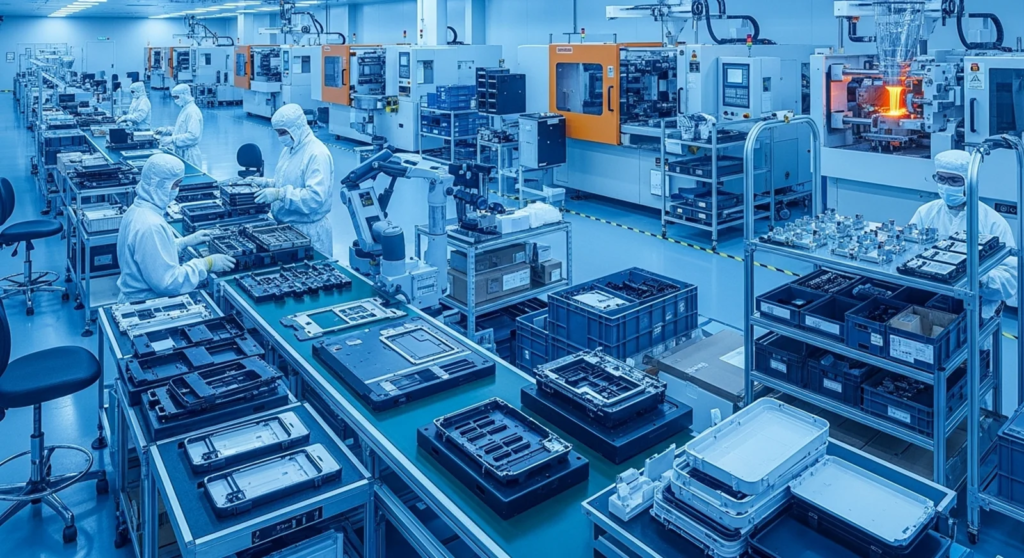
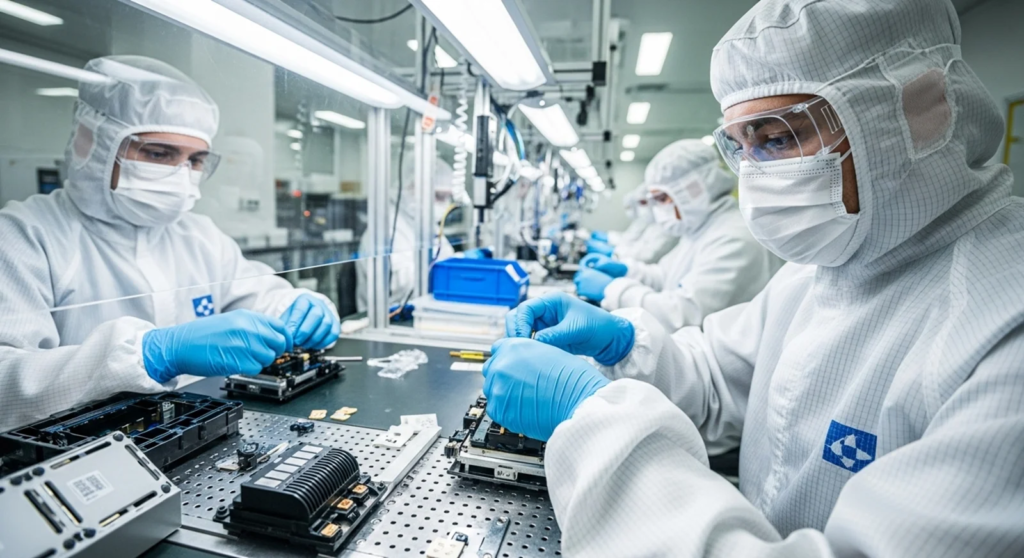
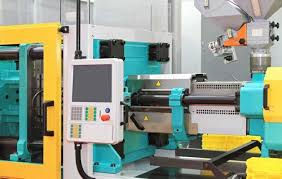
Injection molding is the workhorse of mass production. This process involves injecting molten material usually plastic into a precision-machined steel or aluminium mold. Once the material cools and solidifies, the result is a high-quality, identical part, ready for use or assembly.
Key Features of Injection Molding:
-
High-Volume Production: Ideal for runs of thousands to millions of parts.
-
Unmatched Consistency: Every part is an exact replica of the last.
-
Complex Geometry: Allows for intricate designs with tight tolerances.
Common Applications:
-
Medical devices and lab consumables (like pipette tips and petri dishes)
-
Automotive components (dashboards, interior clips)
-
Consumer electronics (housings for phones and appliances)
-
Durable packaging
Advantages:
-
Low Cost Per Unit: The more you make, the cheaper each part becomes.
-
Excellent Repeatability: Perfect for quality assurance.
-
Superior Strength: Parts can be engineered for high durability.
-
Excellent Finish: Often eliminates the need for secondary finishing operations.
Limitations:
-
High Upfront Cost: Tooling and mold design require a significant initial investment.
-
Longer Lead Times: Creating and testing the mold can take weeks or months.
-
Design Inflexibility: Once the mold is made, changes are very expensive.
What is Prototyping?
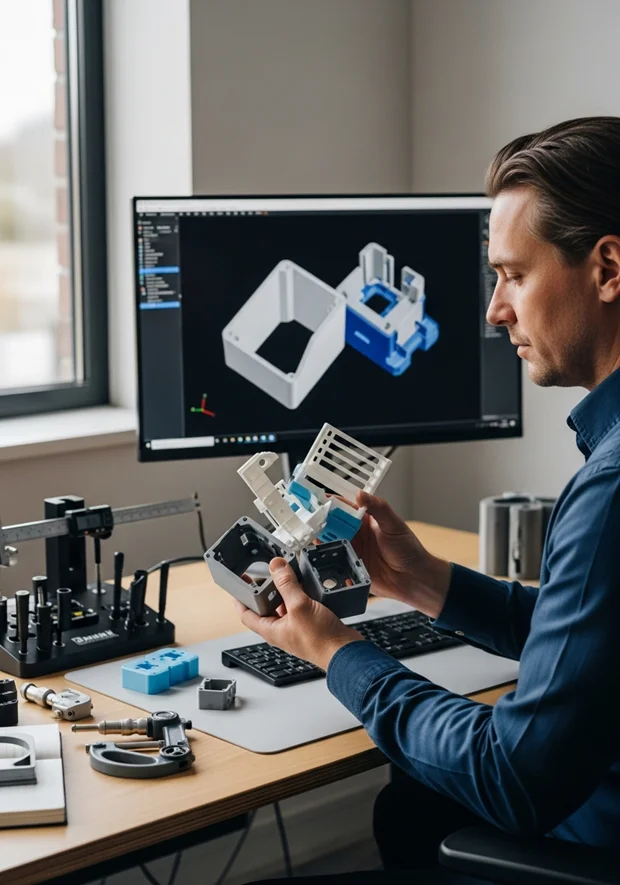
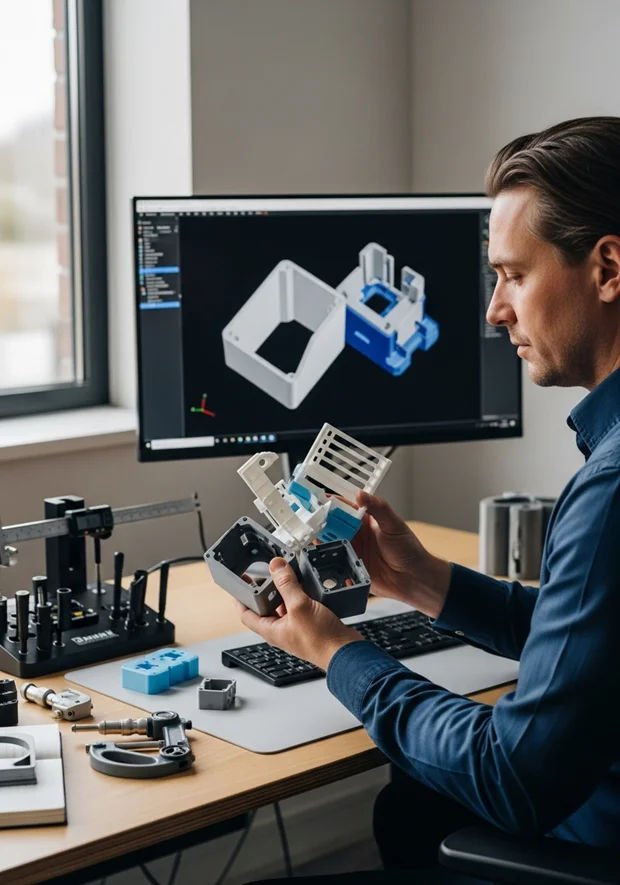
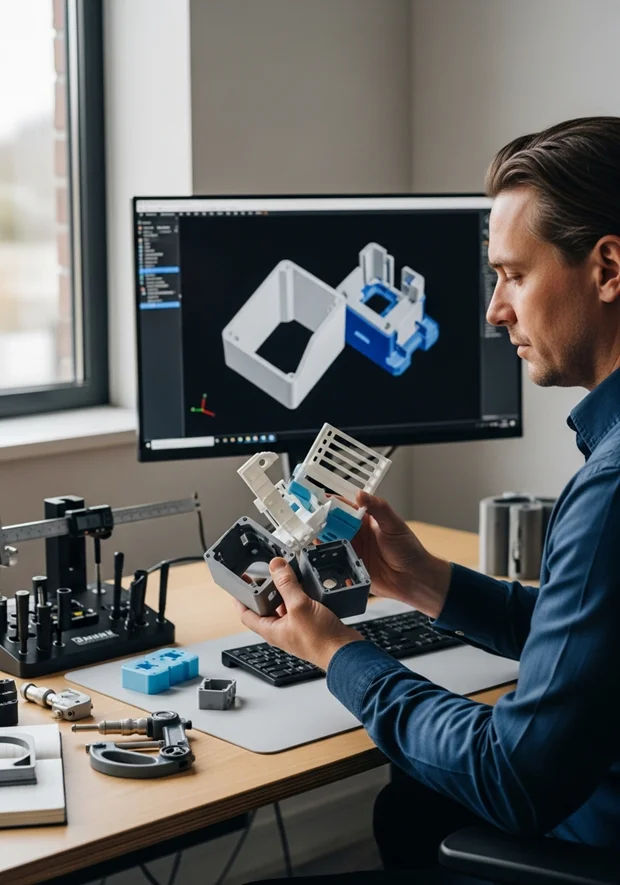
Prototyping is the experimental phase of product development. It’s about bringing your idea into the physical world to test form, fit, and function before committing to expensive tooling. Today, rapid prototyping services like 3D printing and CNC machining have made this process faster and more accessible than ever.
Common Types of Prototyping:
-
3D Printing (Additive Manufacturing): Perfect for complex geometries and quick iterations.
-
CNC Machining (Subtractive Manufacturing): Ideal for parts requiring the strength of production-grade materials.
-
Soft Tooling: Uses silicone molds to create a small batch of parts for functional testing.
Key Features:
-
Fast Design Validation: Get a part in your hands in days, not months.
-
Low Initial Cost: No expensive molds or tooling required.
-
High Flexibility: Easy and inexpensive to make design changes between iterations.
Advantages:
-
Quick Turnaround: Test your concept and gather feedback immediately.
-
Mitigate Risk: Identify design flaws before they become million-dollar mistakes.
-
Investor Ready: A physical prototype is far more powerful than a digital rendering.
Limitations:
-
High Per-Unit Cost: For anything more than a handful of parts, prototyping is expensive.
-
Not for Mass Production: The processes are too slow and costly for large volumes.
-
Material Limitations: While improving, prototype materials may not perfectly mimic the final production plastic.
Injection Molding vs. Prototyping: Head-to-Head
To make the best choice, it helps to see them side-by-side.
|
Factor |
Injection |
Prototyping |
|---|---|---|
|
Primary Goal |
Mass production of final parts |
Design validation and testing |
|
Initial Cost |
Very High (mold creation) |
Low (machine time and aterials) |
|
Per-Unit Cost |
Very Low (at scale) |
High |
|
Lead Time |
Weeks to months (setup) |
Hours to days |
|
Design Flexibility |
Very Low (changes are costly) |
Very High (easy to iterate) |
|
Materialn Options |
Wide range of production-grade plastics |
Growing, but often limited to specific processes |
|
Ideal Volume |
High (1,000+) |
Low (1-50) |
When Should You Choose Prototyping?
Prototyping isn’t just an optional step; it’s a critical investment in your product’s success. It’s the best choice when:
-
You are in the early development stage, and the design is still evolving.
-
You need to prove a concept to stakeholders or potential investors.
-
You want to conduct user testing to get feedback on ergonomics and usability.
-
You need to perform engineering tests to ensure the part can withstand real-world forces.
For startups and R&D teams, investing in rapid prototyping services is the smartest way to de-risk a project before a major financial commitment.
When Should You Choose Injection Molding?
Injection molding is the signal that your product is ready for the real world. It’s the ideal manufacturing method when:
-
Your design is finalized and frozen.
-
You are preparing for a commercial launch and need thousands of parts.
-
Consistency and quality control are paramount, such as in medical or automotive parts.
-
You need to drive down the unit cost to achieve a profitable margin.
Industries like bioprocessing and laboratory consumables rely on injection molding because it guarantees the sterility, precision, and repeatability that healthcare applications demand.
The Smart Strategy: How to Use Both
The most successful product development strategies don’t frame this as an “either/or” question. Instead, they use prototyping and injection molding in a seamless workflow.
The Recommended Product Development Path:
-
Ideate & Prototype: Start with 3D printing or CNC machining to create your first prototypes. Test, fail, learn, and refine your design quickly and cheaply.
-
Validate: Use advanced prototyping techniques to create pre-production parts that closely mimic the final injection-molded product. Perform all your final functional tests.
-
Scale with Injection Molding: Once the design is 100% validated, invest in the injection mold and ramp up to full-scale production.
This combined approach ensures a faster time to market, significantly lowers production risks, and ultimately optimizes your manufacturing costs.
From Concept to Reality with the Right Partner
Navigating the journey from a simple prototype to high-volume production requires expertise. You need a partner who understands the intricacies of design for manufacturability (DFM), material selection, and the tooling process.
A modern manufacturing partner bridges the gap between these two worlds. By offering both advanced custom prototyping services and high-precision injection molding, they provide a single, streamlined path from your first sketch to your millionth unit. This integrated support ensures that the transition from a flexible prototype to a rigid production line is smooth, efficient, and free of unexpected surprises.
FAQs: Injection Molding vs. Prototyping
-
What is the main difference between injection molding and prototyping?
Injection molding is a high-volume manufacturing process for creating final products. Prototyping is a low-volume process for creating models to test and validate a design before mass production.
2.Is prototyping necessary before injection molding?
Yes. While it’s possible to skip it, prototyping is a critical risk-mitigation step. It’s far cheaper to find and fix a design flaw in a $100 prototype than in a $10,000 injection mold.
3.Which is more cost-effective?
It depends on the volume. Prototyping is cheaper for one-off parts and small batches. Injection molding becomes exponentially more cost-effective as your production volume increases into the thousands.
4.Can prototype materials match injection molded materials?
Sometimes. Processes like CNC machining can use the exact same solid plastics as injection molding. However, 3D printing materials often have different properties, so it’s important to select the right technology for your testing goals.
5.How long does each process take?
A simple prototype can be ready in 24 hours. The setup for injection molding, which includes designing and cutting the mold, typically takes 4-12 weeks depending on complexity.