

Industrial manufacturers often choose between plastic machining and injection molding based on part complexity, production volume, material requirements, and tolerances. Both manufacturing methods play an important role in producing precision plastic components for medical, laboratory, industrial, and engineering applications.
What Is Plastic Machining?
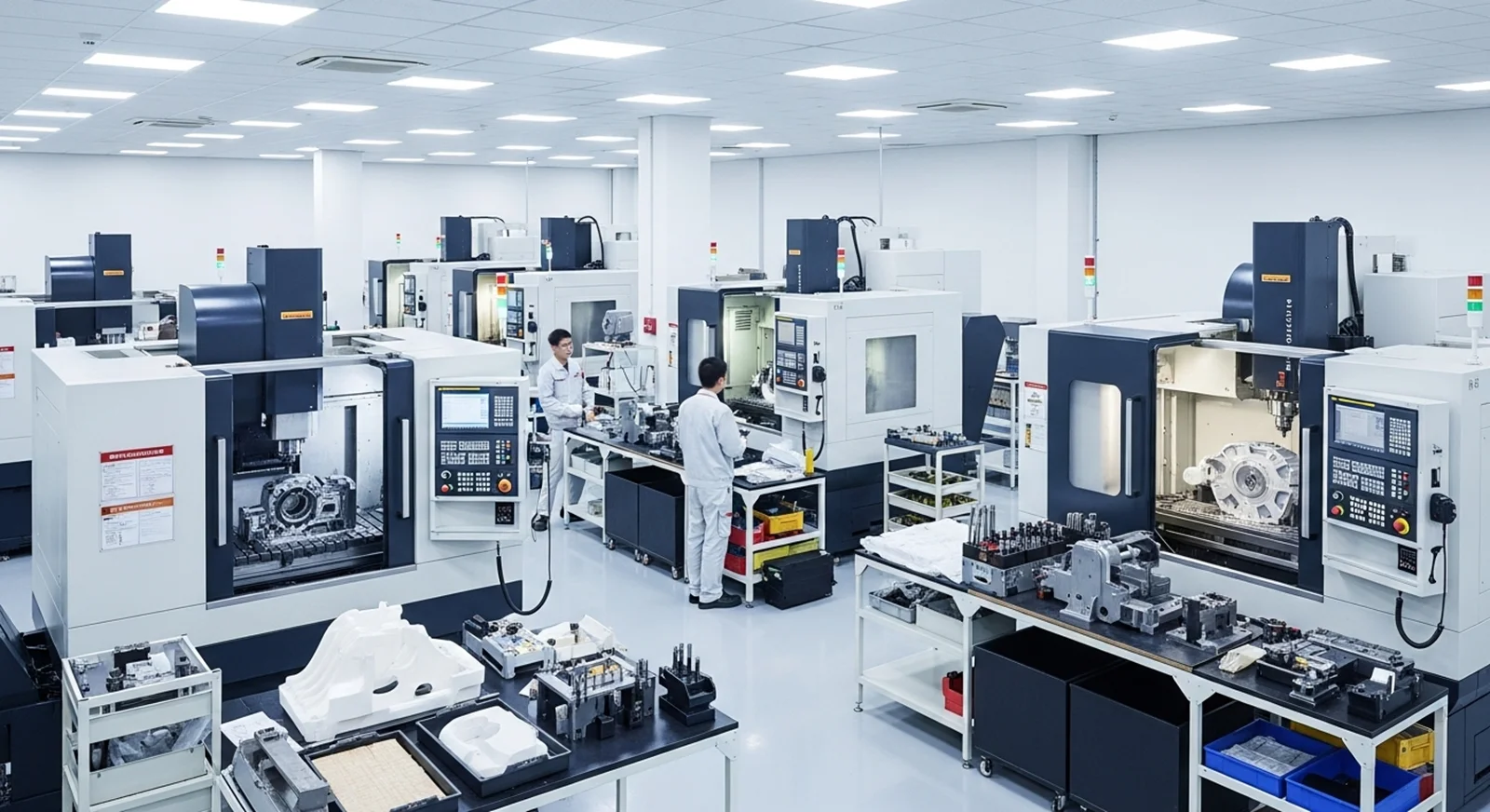
Plastic machining is a subtractive manufacturing process in which solid plastic stock materials such as rods, sheets, and tubes are cut and shaped using CNC mills, lathes, routers, and drilling equipment. This process is ideal for custom plastic components, prototypes, and low- to medium-volume production runs. Plastic machining supports materials including PEEK, PTFE, UHMW, HDPE, polypropylene, and acetal. The process delivers tight tolerances, excellent dimensional accuracy, and the flexibility to modify designs without expensive tooling changes.
What Is Injection Molding?
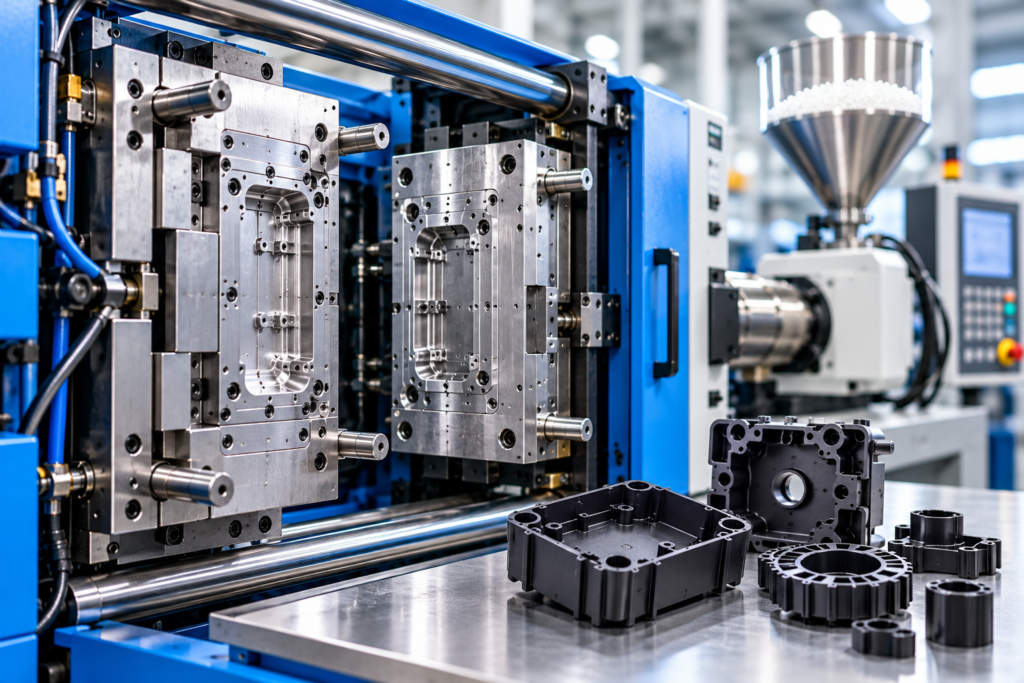
Injection molding is a manufacturing process where molten plastic resin is injected into a metal mold under high pressure. After cooling, the finished component is ejected and repeated in large quantities. Injection molding is commonly used for high-volume production because it provides fast cycle times and consistent part replication. However, mold design and tooling costs can be significant, making it less suitable for prototypes or small production batches.
Key Differences Between Plastic Machining and Injection Molding
The biggest difference between the two processes is production volume and tooling requirements. Plastic machining requires minimal setup and no dedicated molds, making it suitable for custom industrial plastic parts and rapid prototyping. Injection molding requires an initial investment in tooling but becomes cost-effective for large-scale production. Machined parts generally offer superior material flexibility and tighter tolerances, while molded parts provide lower per-unit costs for high-volume manufacturing.
Applications Across Industrial Markets
Plastic machining is widely used to manufacture manifolds, laboratory equipment components, fluid handling parts, pump components, and custom-engineered assemblies. Injection molding is commonly used for consumer products, packaging, medical disposables, and standardized industrial components. Industries such as life sciences, pharmaceuticals, biotechnology, and industrial processing often rely on precision-machined plastic components when complex geometries or specialized materials are required.

Why Foxxtechnologies Is Special?
Foxxtechnologies specializes in precision plastic machining services with advanced CNC capabilities, engineering expertise, and high-performance polymer processing. The company supports custom component manufacturing for laboratory, industrial, and life science applications, delivering reliable quality, material flexibility, and precise dimensional control.
FAQs
-
When should manufacturers choose plastic machining?
Plastic machining is ideal for prototypes, custom components, low-volume production, and applications requiring tight tolerances or specialized engineering plastics.
-
Why is injection molding preferred for large production runs?
Injection molding reduces per-part costs and produces consistent components efficiently once tooling and molds have been developed.
-
Which materials can be used in plastic machining?
Common materials include PEEK, PTFE, polypropylene, acetal, HDPE, and UHMW for demanding industrial applications.
-
Does plastic machining provide better design flexibility?
Yes. Design modifications can be made quickly without replacing expensive molds or tooling, reducing development time and costs.
-
Which industries use precision plastic machining services?
Life sciences, pharmaceuticals, laboratory equipment manufacturing, industrial processing, and fluid handling industries commonly use machined plastic components.
Found this site through a friend and I am glad I did. The rewards system is very motivating. Give phjilibbcom a try!
Really enjoying the current promotions. The gameplay is fluid and the wins feel rewarding. Jump into pkq98 and see for yourself.
phxojili is surprisingly easy to navigate. I didn’t have any trouble setting up my account or finding my favorite games. Very smooth operation overall.
Found this place through a friend and it did not disappoint. The bonuses are actually fair and easy to claim on bdok999.
Just downloaded the app and the interface is super smooth. Really enjoying the experience so far. Check out 118betapk for a great time!
Very user friendly layout and the promotions are actually worth it. I feel lucky whenever I log in here. Check out luky97login
Really enjoying the slots here. The graphics are great and I’ve had a couple of decent wins today. Visit phjili95
Very reliable platform with a great selection of slots. I had a huge win yesterday on gg189login and the withdrawal was instant.
I appreciate the transparency and the clear terms of service. No hidden catches here. I feel safe betting on krcasinokrwin.
Finally found a site that actually treats players right. The bonuses at xjilicom are legit and easy to claim.